Lavalier
 Headset & Earset
 Handheld
 Instrument
 Pencil
 Shotgun
 Gooseneck
 Immersive
 Kits
Kits
Deep dive: Piano sound fields and miking implications
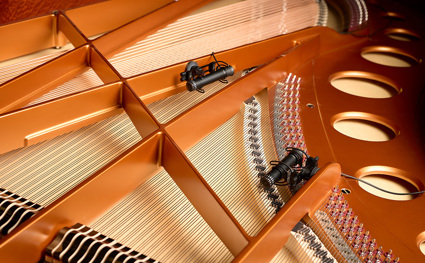
The piano is a huge instrument in every sense. Before placing any microphones, it is a good idea to get a little more insight into how the sound fields around (and inside) the instrument work. We made measurements with a ten-mic array, measurements you may not have seen before. This article provides facts to expand your knowledge – and your sound.
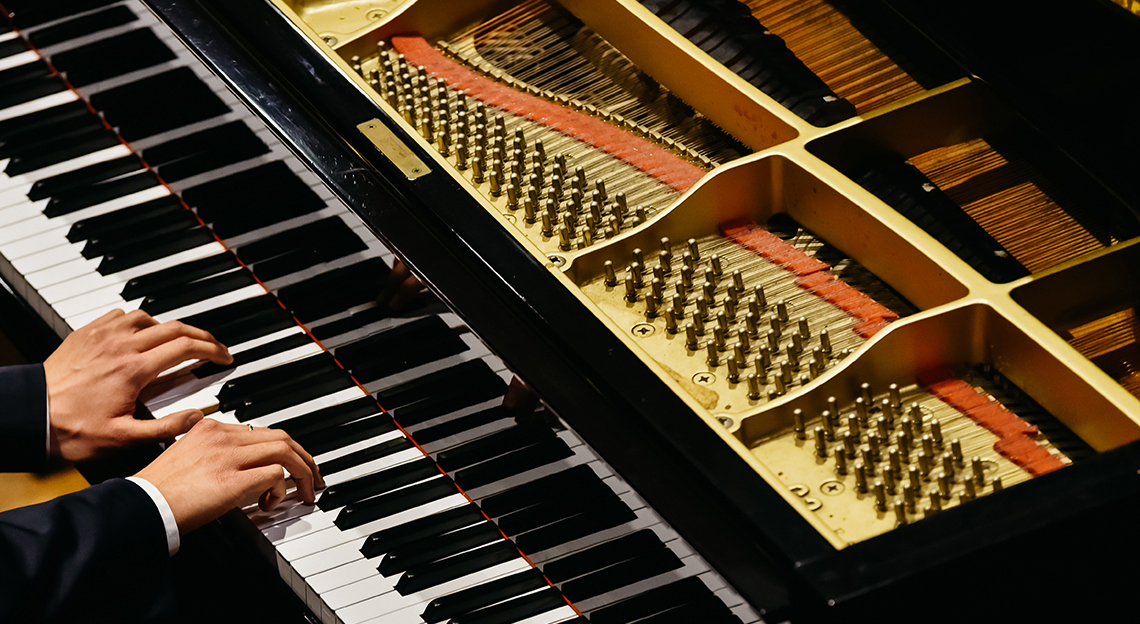
The piano as a sound source
Near field vs. far field
The near field is often defined as the region around a sound source where the room has no influence, and, for the piano, it is basically where microphones are very close to the strings. However, this is not where a person would be listening from. There is another way to define the near field: from the pianist's perspective at the keyboard. That is why the recording engineer and the piano player do not always agree on what sounds best.
The far field is the place where other listeners are located. Here, room acoustics is a part of the experience. As with many acoustic instruments, especially in classical music, the instrument and the room together provide the full experience of the instrument. Sound is radiated in many directions and is “summed up” in the room. Then it is a question of finding the balance between instrument and room.
Conclusion: Be aware of the listener’s perspective.
What/what not to capture?
Usually, we want to capture the instrument’s full frequency range and the full dynamic range. We may also want to capture the perceived size of the instrument, anything “grand” about the piano.
We don’t want to capture the secondary mechanical noise of the piano, such as pedal activation, hammer board movement, etc. Mechanical vibrations from the frame and cabinet should also be avoided in the recorded tracks.
Furthermore, we want to avoid picking up the sound of other instruments or other nearby sources around the piano.
Conclusion: Ensure that the mechanical noises from the instrument are not picked up by the mics.
What kind of sound source is the piano?
The sound field around the piano is complex. This is why we invest so much energy in mic selection, placement, and other factors when recording – or amplifying – the instrument.
In the far field (>5 meters away), the piano can usually be thought of as a point source. Meaning the SPL will be reduced by 6 dB for each doubling of the distance (assuming no reverberation).
Close to a single string, it may be regarded as a line source (the level drops by 3 dB for each doubling of the distance). However, because more than one string is normally played, the sound field above the soundboard approaches that of a plane source, which ideally provides a constant SPL. Not being a point source also means there is (almost) no proximity effect with gradient microphones (cardioids).
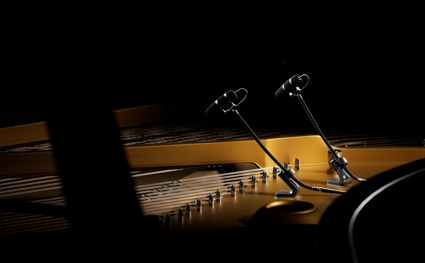
Here are some measurements taken with our ten-mic array in a vertical position above the soundboard, centered above the middle of the frame (middle C), and with no lid on the piano. The lowest microphone position is 10 cm above the strings.
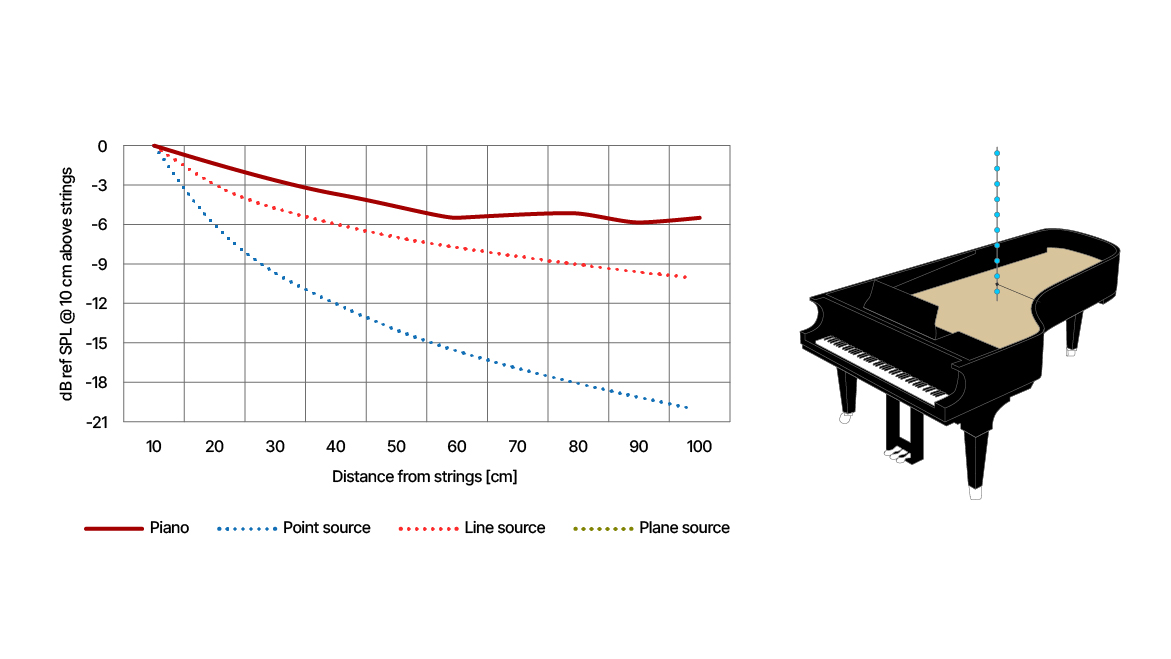
Figure 1. The red full curve shows how the sound pressure level from 10 cm to 100 cm above the strings attenuates, as if it were the average of a line and a plane source. The measurement is taken without the lid. The dashed lines show the theoretical attenuation of point-, line-, and plane sources, respectively. (the photo is substituted by a drawing)
Conclusion: The SPL is rather constant around the instrument, compared to many other instruments. It also gives the freedom to use omnis or cardioids, depending on taste. There is almost no proximity effect involved.
Behavior of the string
The fundamental frequency of the string depends on the physical dimensions, the string’s tension, stiffness and mass. Further, the timbre to some degree is affected by where and how the string is struck, at least during the initial part of the tone. On the piano, the hammers have a fixed position in the string’s length direction. (On a guitar, the string can be struck at different positions along its length, which may change its tonal behavior.)
When we acknowledge these physical parameters, we see that experience, listening skills, tradition, and handcraft in piano-building have yielded an instrument in which low-frequency notes are generated by one or two long, thick, wound strings and high-frequency notes by three shorter, thinner strings. This differentiation is made to give us equality and coherence across the frequency span.
So, in principle, the length of a string does not have any direct relation to the frequency generated, unlike, for instance, the pipe organ. In principle, the same length of string can generate the entire scale.
The string is suspended between two points. When the hammer hits the string, an impulse travels along the string. However, after a short time, standing waves occur. These waves (like standing waves in rooms) have wavelengths that are fractions of the string's length. Further, the string vibrates both vertically and horizontally (transverse vibrations), which causes it to rotate. These motions have slightly different frequencies. So, the physical properties of the string may give rise to inharmonic partials (harmonics). This is particularly the case when the string gets thicker and thus stiffer.
It must be mentioned that pianos, in their tuning to please the ear, must be “stretched” at higher frequencies to compensate for the hearing’s compression of the scale. It means that the highest frequencies are tuned slightly higher than the mathematically calculated scale would require.
Conclusion: There are always inharmonic partials present, which are a part of the piano’s sound characteristics.
SPL vs. position along the string
The sound pressure level (SPL) along a string may vary, depending on the string’s waveform and way of vibrating. Here is a measurement along one single string (A1), from 10 cm above the hammer and with a spacing of 10 cm along the string, up to 90 cm from the hammer’s position.
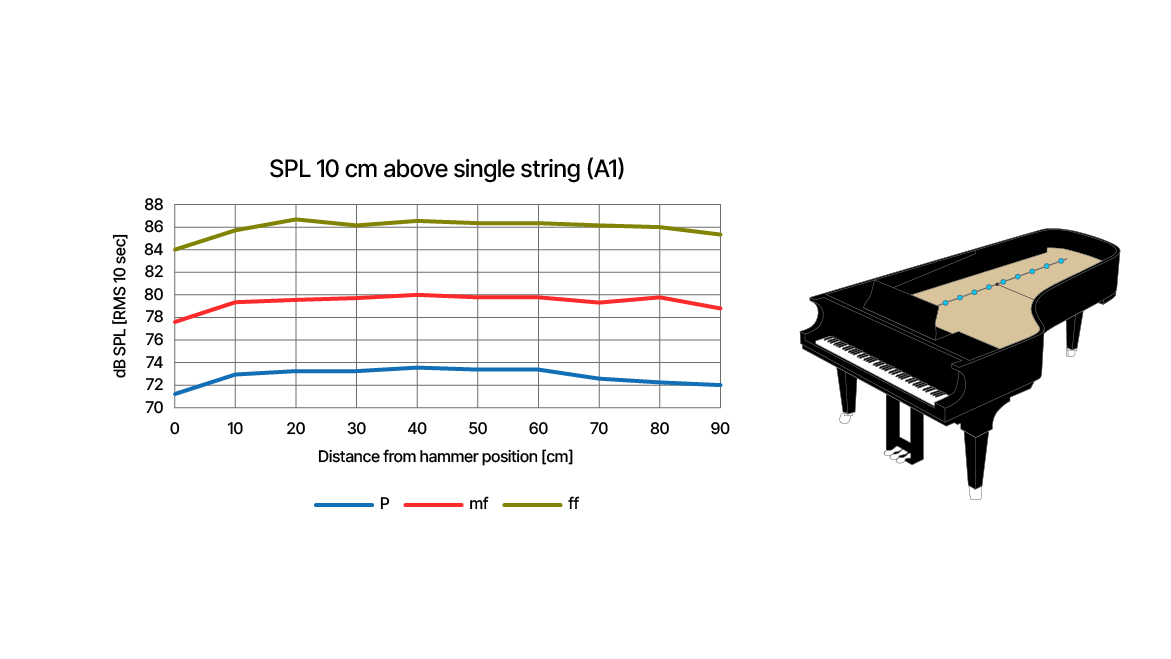
Figure 2. Measurement of SPL depending on position along one single string (A1 = 55 Hz). The array of microphones consists of 10 units, spaced by 10 cm. 0 cm corresponds to the position right above the hammer. The string was stroked with a force corresponding to piano, mezzo forte and fortissimo, respectively.
Conclusion: The measurement shows that the level difference along the string is approximately 2-3 dB. It also shows that the difference between p (piano) and mf (mezzo forte) is approximately 6 dB, as is the difference between mf and ff (forte fortissimo), also around 6 dB.
Correlation vs. position along the same string(s)
When recording audio for immersive, enveloping audio, you are seeking a suitable correlation between channels. If it is too high, it is like reproducing mono signals: the closest speaker defines the direction, you cannot hear the others and no envelopment is experienced. If the correlation is too low, it sounds like unrelated, separate sources.
When miking the piano, it is common to place two microphones above the strings, one predominantly for the bass region and the other for the higher frequencies, to achieve a decent stereo image. In the piano, there is at least one more dimension to consider: Front/back. Actually, it is possible to use two stereo microphone sets simultaneously, i.e., one set placed right above the hammers and another set further down the strings.
In the above-mentioned level recording, which was made with 10 microphones along the string, the same recording is used to demonstrate an immersive piano recording.
The correlation between the positions was measured. The results are listed in the table below. In all cases, microphone 00, placed above the hammer, is the reference (channel 1), and the other channel (2) contains the signals from mic 10 through 90, successively.
| Distance between mics | Channel 1 input | Channel 2 input | Correlation range -1 to +1 | Comment |
|---|---|---|---|---|
| 0 cm | Mic 00 | Mic 00 | 1.00 | |
| 10 cm | Mic 00 | Mic 10 | 0.95 | |
| 20 cm | Mic 00 | Mic 20 | 0.86 | |
| 30 cm | Mic 00 | Mic 30 | 0.72 | |
| 40 cm | Mic 00 | Mic 40 | 0.60 | |
| 50 cm | Mic 00 | Mic 50 | 0.40 | |
| 60 cm | Mic 00 | Mic 60 | 0.25 | |
| 70 cm | Mic 00 | Mic 70 | 0.20 | Large correlation variation during decay |
| 80 cm | Mic 00 | Mic 80 | 0.10 | Large correlation variation during decay |
| 90 cm | Mic 00 | Mic 90 | 0.10 | Large correlation variation during decay |
Table 1. Correlation between different positions above the same string (A1). See the fact box at the end of this article for more information on correlation.
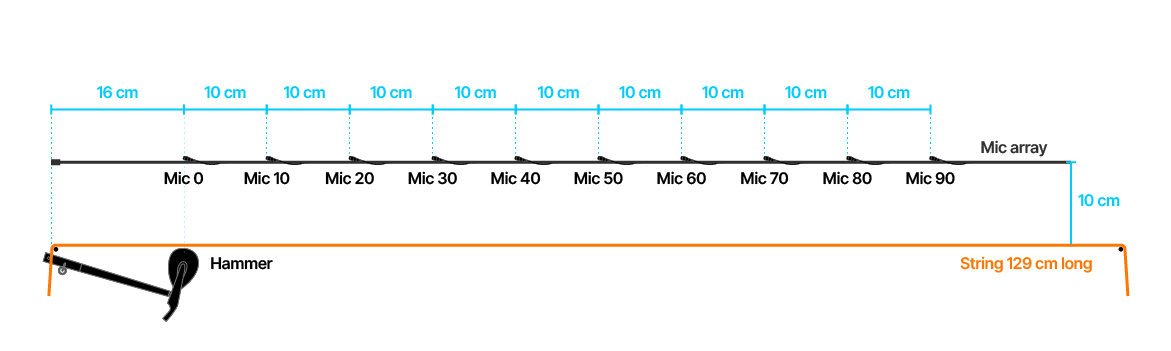
Figure 3. These are the dimensions of the string measured (A1), the hammer's position and the positions of all the microphones.
Listen to the increasing envelopment from recording the same string in two positions.
Conclusion: It is worth experimenting with more microphones inside the piano. It is an opportunity to create enveloping content within the same musical instrument.
Focusing the sound field
Changing the lid's position may alter the piano’s sound-field projection.
We conducted a test where the array was placed vertically above the center of the soundboard (as in Figure 1). This recording was used as a reference for positions outside the piano, specifically 60 cm from the arch perpendicular to the opening of the lid.
The lowest microphone (Mic 00) was positioned 10 cm above the strings throughout all measurements. (See Figure 4):
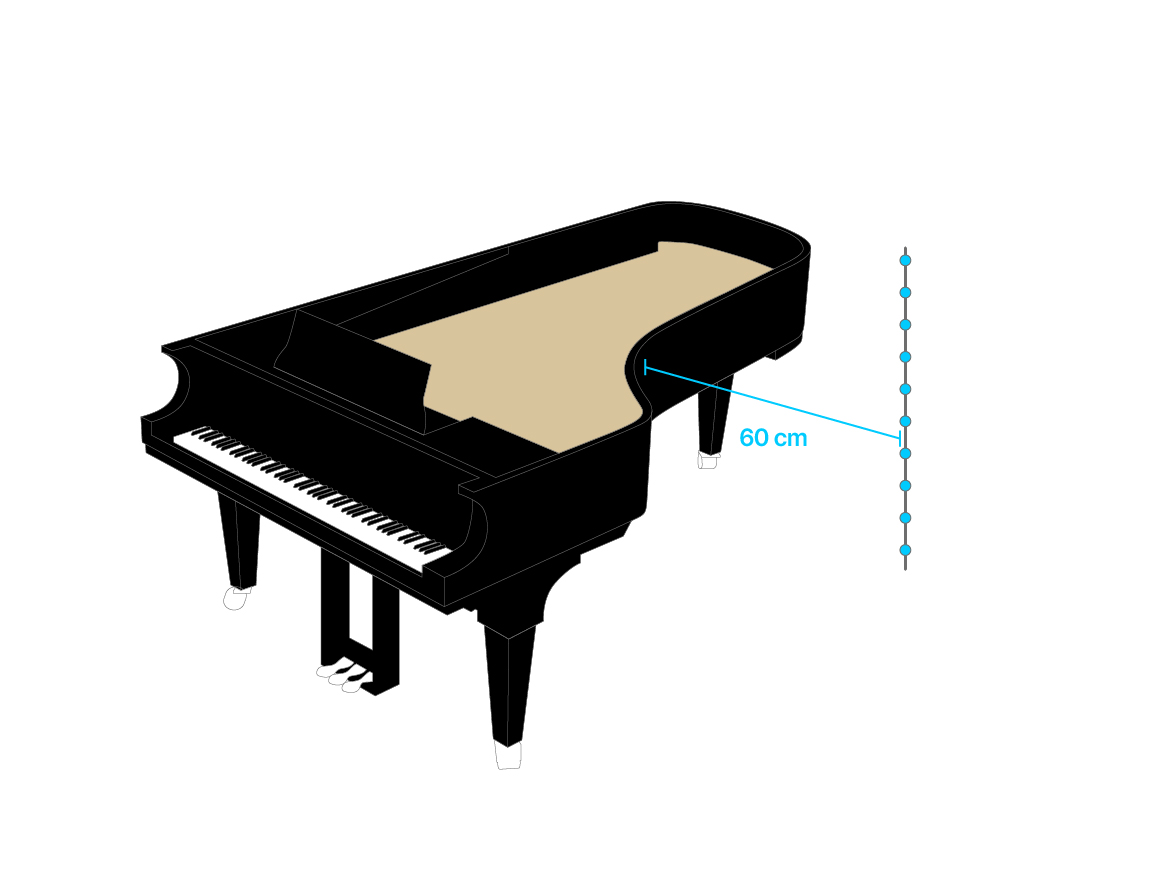
Figure 4. Placement of the array in front of the piano, 60 cm from the arch.
The stick lengths were 12 cm (small), 28 cm (medium) and 80 cm (long).
The following frequency spectra illustrate some of the results from this experiment. The SPL of each measurement is also included.
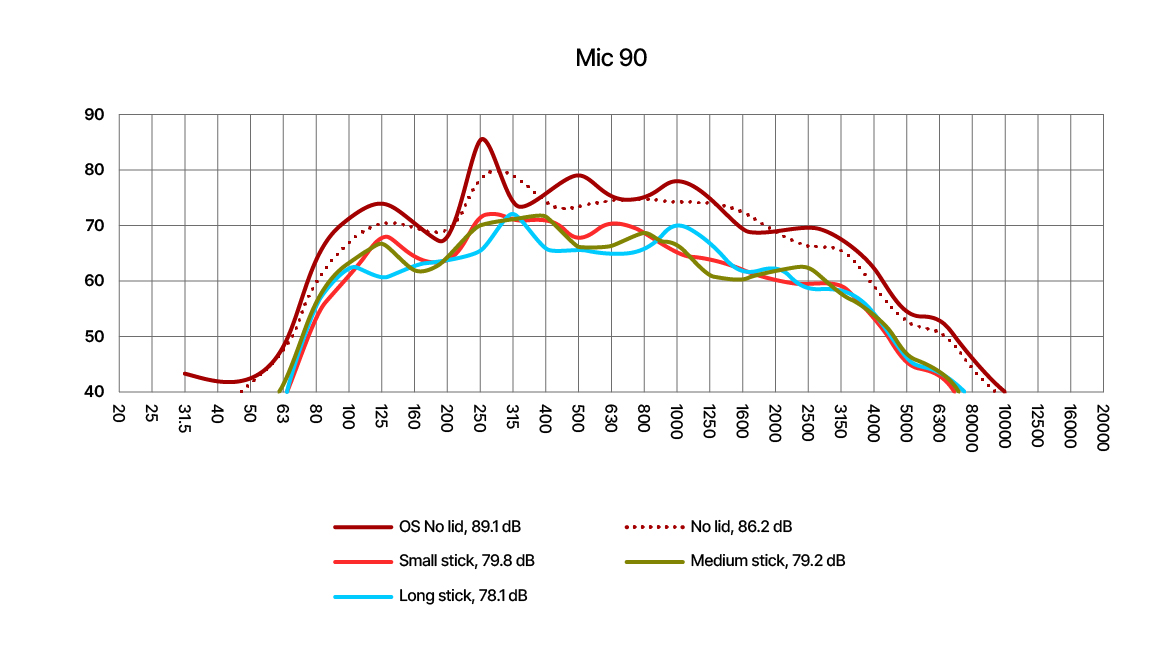
SPL, Mic 90
Over strings, no lid: 89 dB
60 cm from arch, no lid: 86 dB
60 cm from arch, small stick: 80 dB
60 cm from arch, medium stick: 79 dB
60 cm from arch, long stick: 78 dB
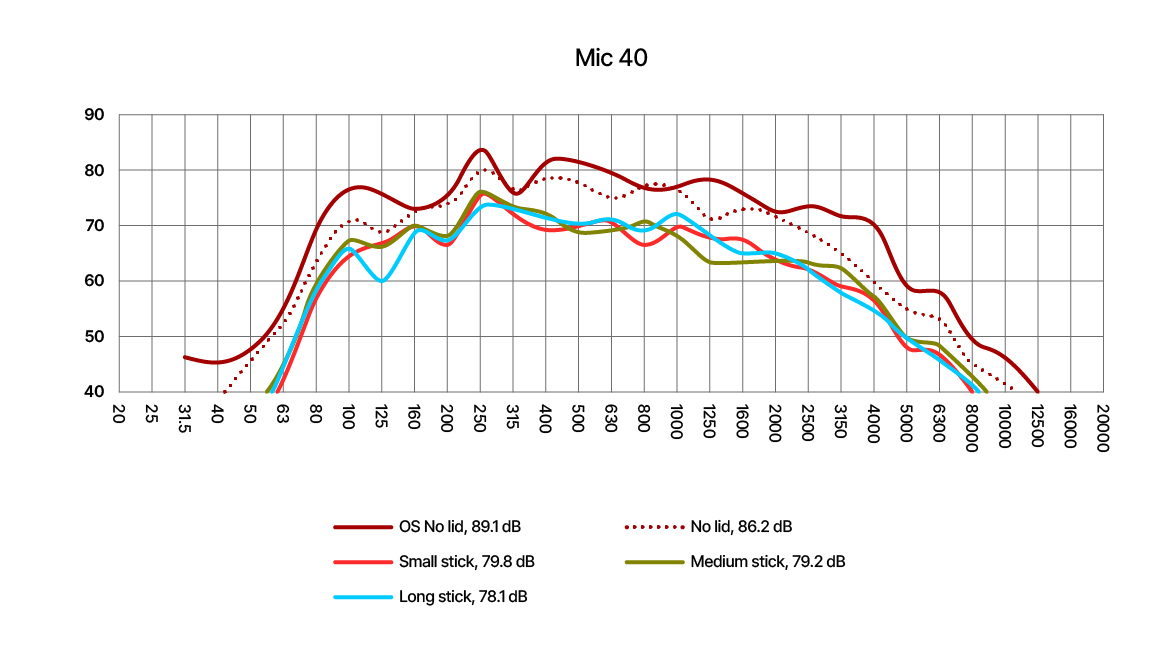
SPL, Mic 40
Over strings, no lid: 90 dB
60 cm from arch, no lid: 87 dB
60 cm from arch, small stick: 82 dB
60 cm from arch, medium stick: 82 dB
60 cm from arch, long stick: 81 dB
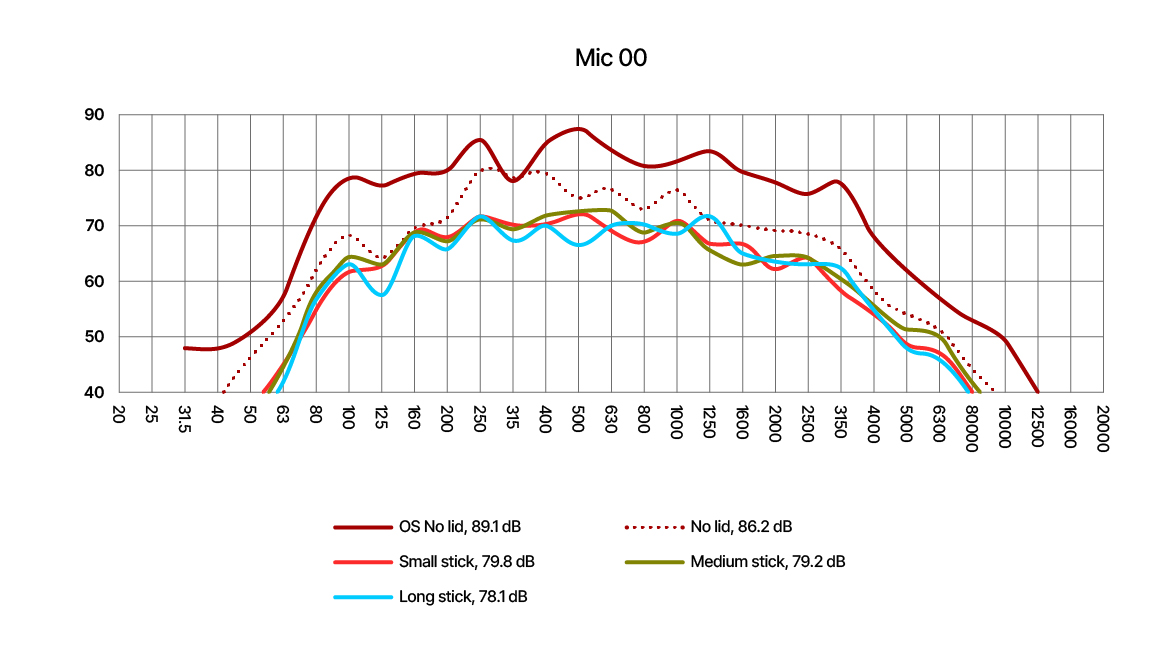
SPL, Mic 00
Over strings, no lid: 95 dB
60 cm from arch, no lid: 87 dB
60 cm from arch, small stick: 81 dB
60 cm from arch, medium stick: 81 dB
60 cm from arch, long stick: 81 dB
Figure 5. Selected results from the measurements (1/3-octave spectra).
Conclusions: First, these measurements are based on 1/3-octave analysis, which is usually a good descriptor of the timbre of a full spectrum. However, the filters are too wide to show individual partials.
It seems that a position approximately 50 cm above the strings (Mic 40) provides the most balanced spectrum, better low-frequency weight and a slightly higher SPL.
However, the timbre at the microphone position 1 meter above the strings, 60 cm from the arch (Mic 90), shows a little more presence than at other positions.
If the microphone position is too low, the piano frame's shadow will affect the sound to some degree.
The variance of the SPL with respect to stick length appears smaller than one would expect. When listening to recordings, single reflections from the lid can cause comb filtering. But because of the “wide” sound source, the effect is almost imperceptible.
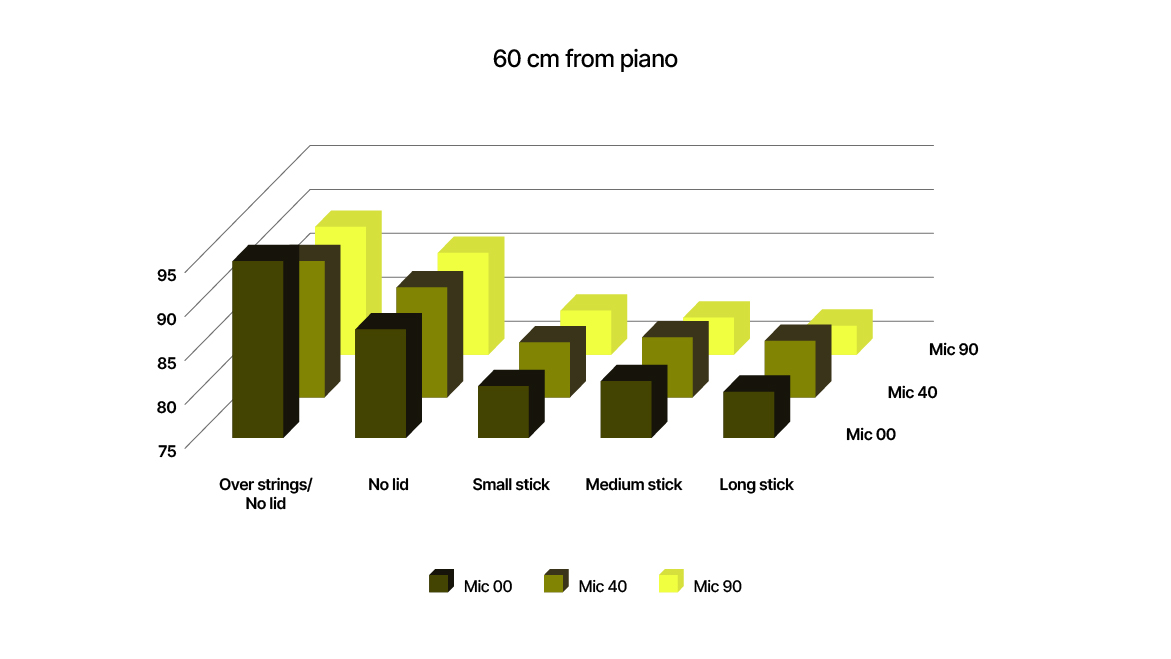
Figure 6: Comparison of SPL from three microphones on the array. This shows that, even with a long stick, the level is the highest at Mic 40 (50 cm above the plane of the strings).
Inside/outside the piano
When placing microphones in/around a piano, they may pick up sound from other sources. This should be especially avoided when using microphones to amplify the instrument.
We conducted measurements to quantify the lid's role. It is common to close the lid when the piano is amplified. However, it sometimes seems not to have the effect we wish for.
So, our microphone array was placed above the strings. (Only the hammer position is reported here).
An external source, a PA-loudspeaker, was placed in the direction of the lid opening. The loudspeaker signal was pink noise. (See figure 4). The result is an average across all 10 microphones.
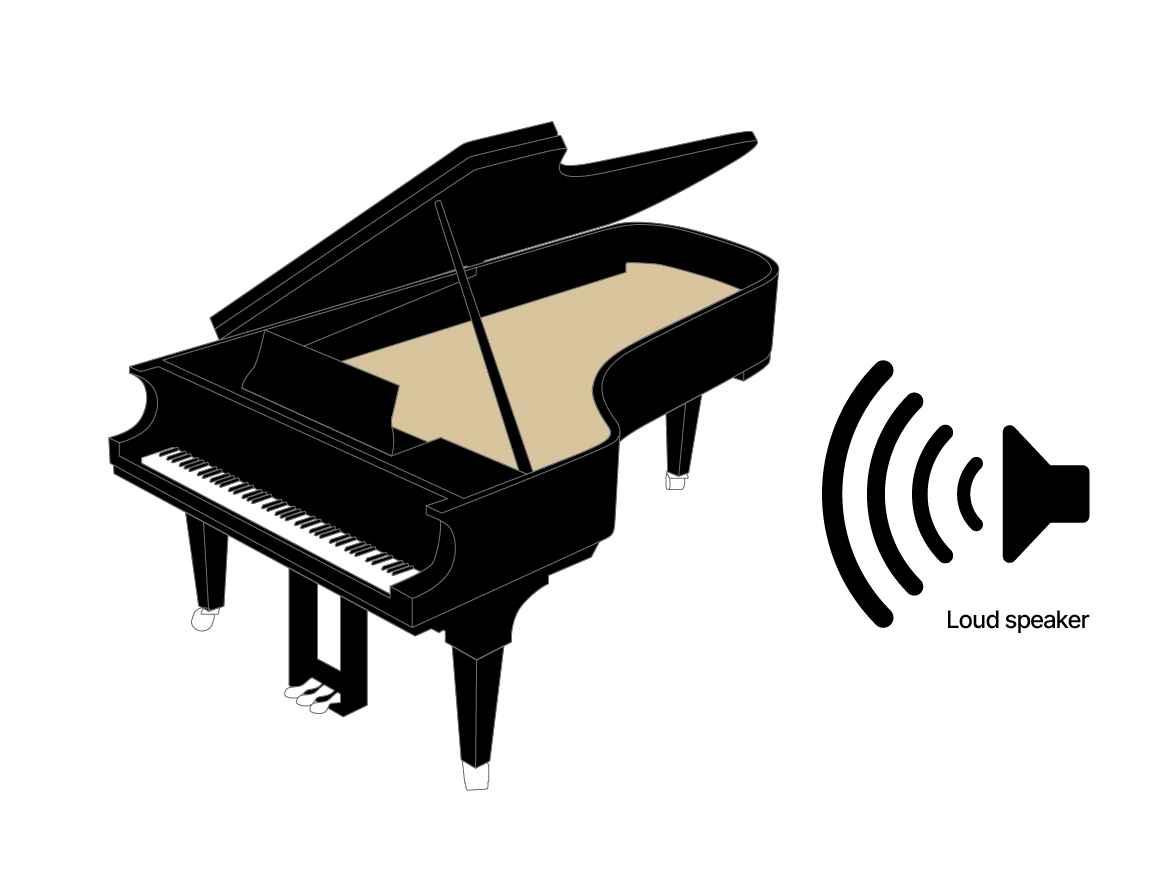
Figure 7. Setup for recording external sound source (a PA-loudspeaker).
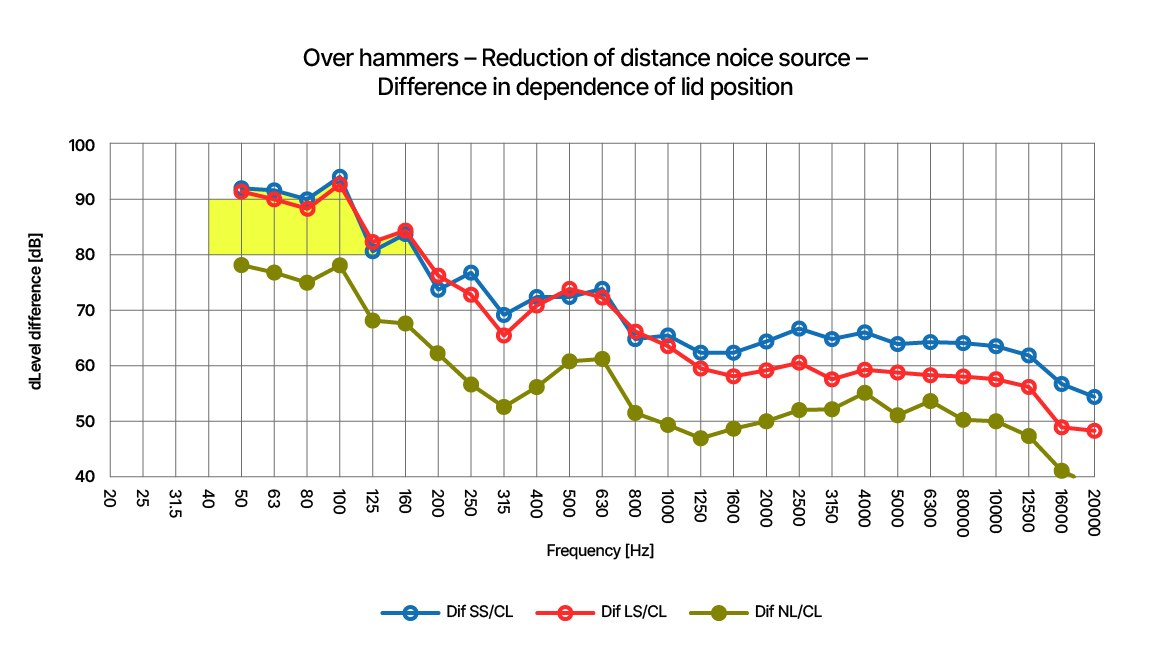
Figure 8. This is the difference between lid positions. The three curves show the difference between the sounds measured inside the piano:
Blue curve: Short stick (SS) vs. closed lid (CL). There is a low-frequency gain when the lid is closed. Above 200 Hz, there is an attenuation of the external sound.
Orange curve: Long stick (LS) vs. closed lid (CL). There is a low-frequency gain when the lid is closed. Above 200 Hz, there is an attenuation of the external sound.
Green curve: No lid (NL) vs. closed lid (CL). The low-frequency attenuation only exists because the level is higher when the lid is off.
Conclusion: Closing the lid reduces external sound only above 200 Hz. At low frequencies, you may unfortunately experience a gain of approximately 5 dB!
Fact Box 1:
How we made the analysis
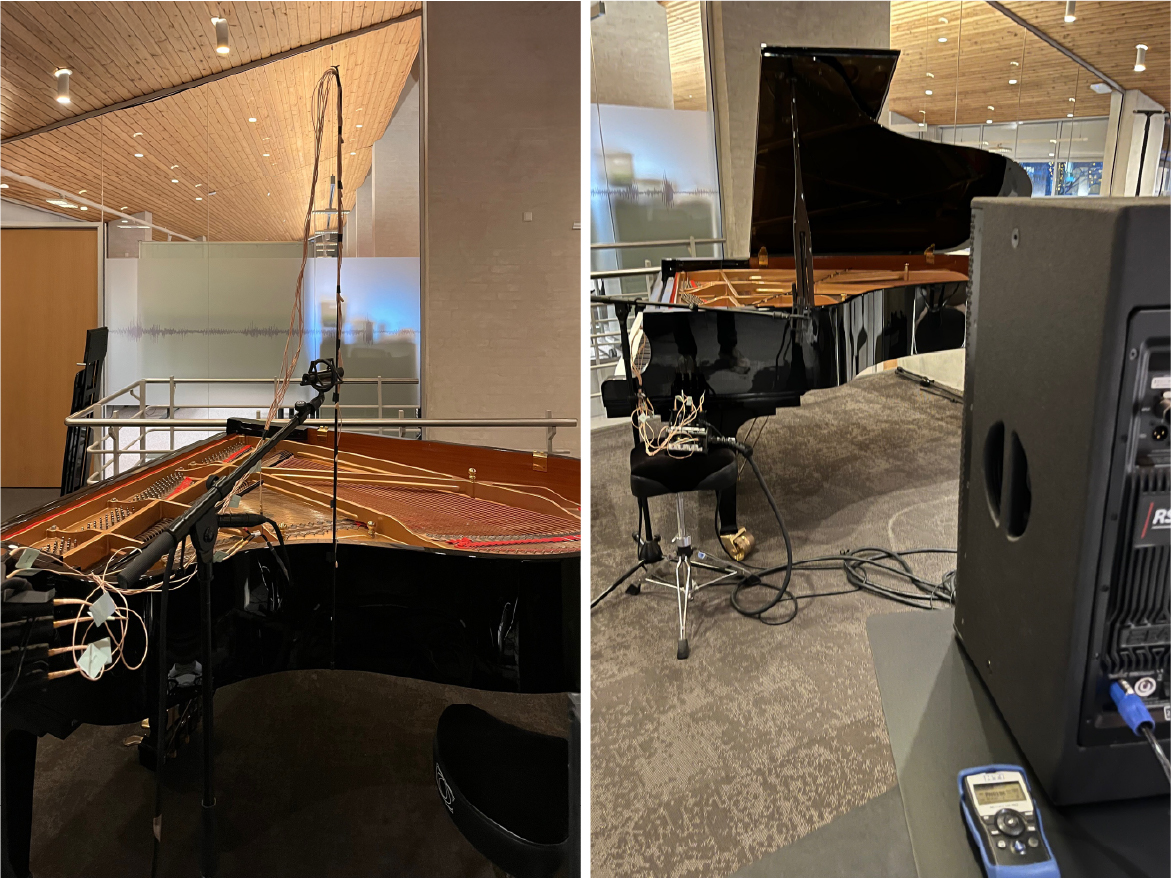
We designed a straight microphone array consisting of 10 omnis (4060 CORE+) arranged on a slim stick with 10 cm spacing between microphones. The Phantom adapter (DAD9001) was used with all microphones.
The mics were connected to a Digital Audio Denmark converter and recorded in ProTools (32-bit, 96 kHz).
The microphones were calibrated using an acoustic calibrator (B&K 4230).
The spectra were analyzed using Smaart Suite and EASERA.
Spectra of keystrokes (single or across the whole keyboard) were analyzed using infinite averaging (>2 minutes per sequence, looped) and the results were transferred to a spreadsheet for presentation.
The subject of the measurements was a Kawai piano.
Fact Box 2:
About correlation
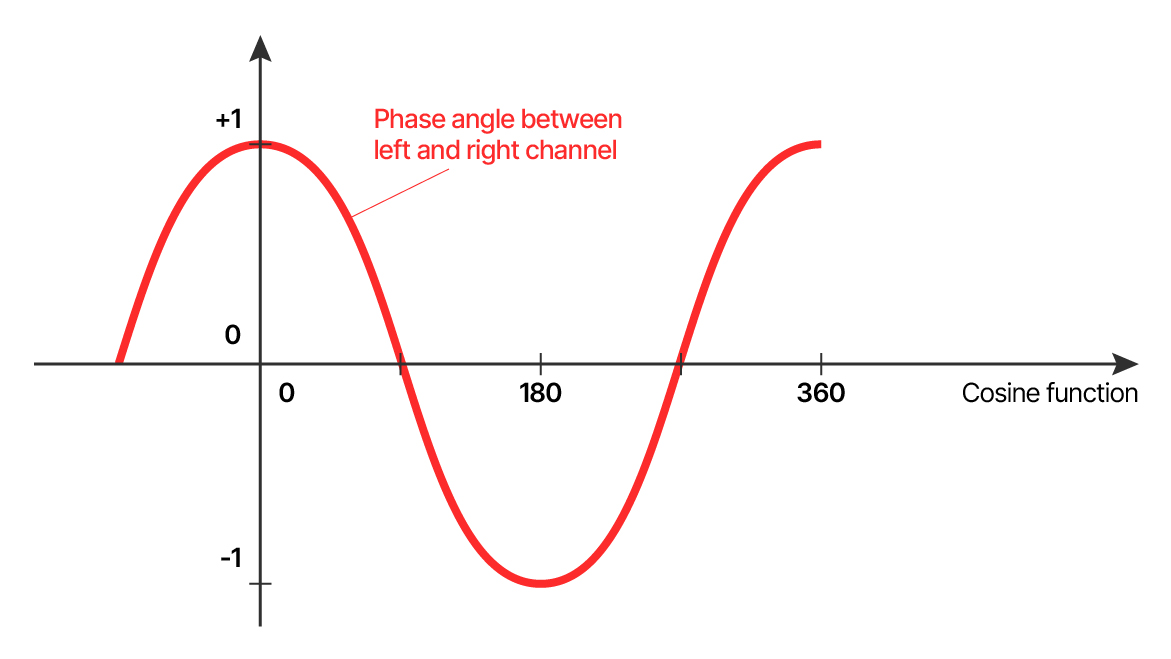
In audio, we measure the correlation between the two channels of a stereo signal. Most DAWs include a correlation meter. This is sometimes also called a phase meter. Technically, it is the cosine of the phase angle between the channels. Thus, the value can go from -1 to +1. If the channels are completely out of phase, the reading is “-1”. If the channels are completely in phase, the reading is “+1”.
In immersive production, it is an advantage if channels are not completely correlated (or you will only hear the nearest loudspeaker). Usually, the correlation coefficient between channels should be around 0.2. There is a time factor for averaging the signals and stabilizing the reading. However, this averaging also provides the overall correlation value.
Ref: Brixen, Eddy B.: Audio Metering, 3rd edition, Routledge.