 Lavalier
 Headset & Earset
 Handheld
 Instrument
 Pencil
 Shotgun
 Gooseneck
 Immersive
 Kits
Kits
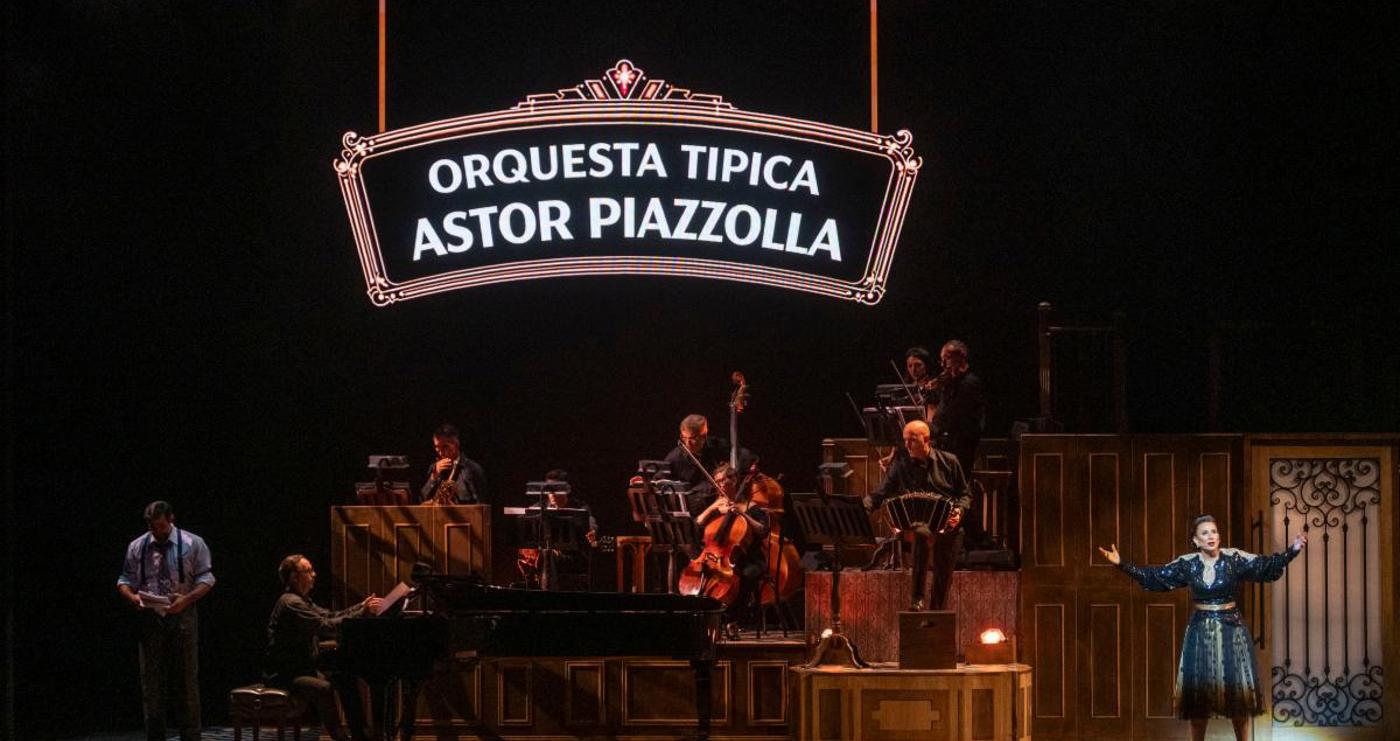
The Teatro Colón in Buenos Aires is not a venue that tolerates compromise. Built in 1908 and routinely ranked among the world's finest concert halls, it has an acoustic character that took over a century to earn. So, when the theatre commissioned "Astor Piazzolla, Eterno" — a large-scale immersive theatrical production celebrating the life and music of Argentina's most iconic composer — the sound design team faced a challenge that has no easy answer: amplify a full orchestra and cast without touching the room's soul.
Sound designer Rodrigo Lavecchia of Lavecchia Sonido built the system around DPA Microphones technology. It was the right call.
The problem with amplifying a legendary room
Any engineer who has worked in a highly reverberant, acoustically sensitive hall knows the paradox: the very properties that make the room special are also the properties that make reinforcement difficult. High gain before feedback is hard to achieve. Timbral consistency across instrument families is hard to maintain. And the moment the audience can hear the PA system as a PA system, you've lost.
For "Astor Piazzolla, Eterno," the answer wasn't to fight the room — it was to find microphones transparent enough to work with it.
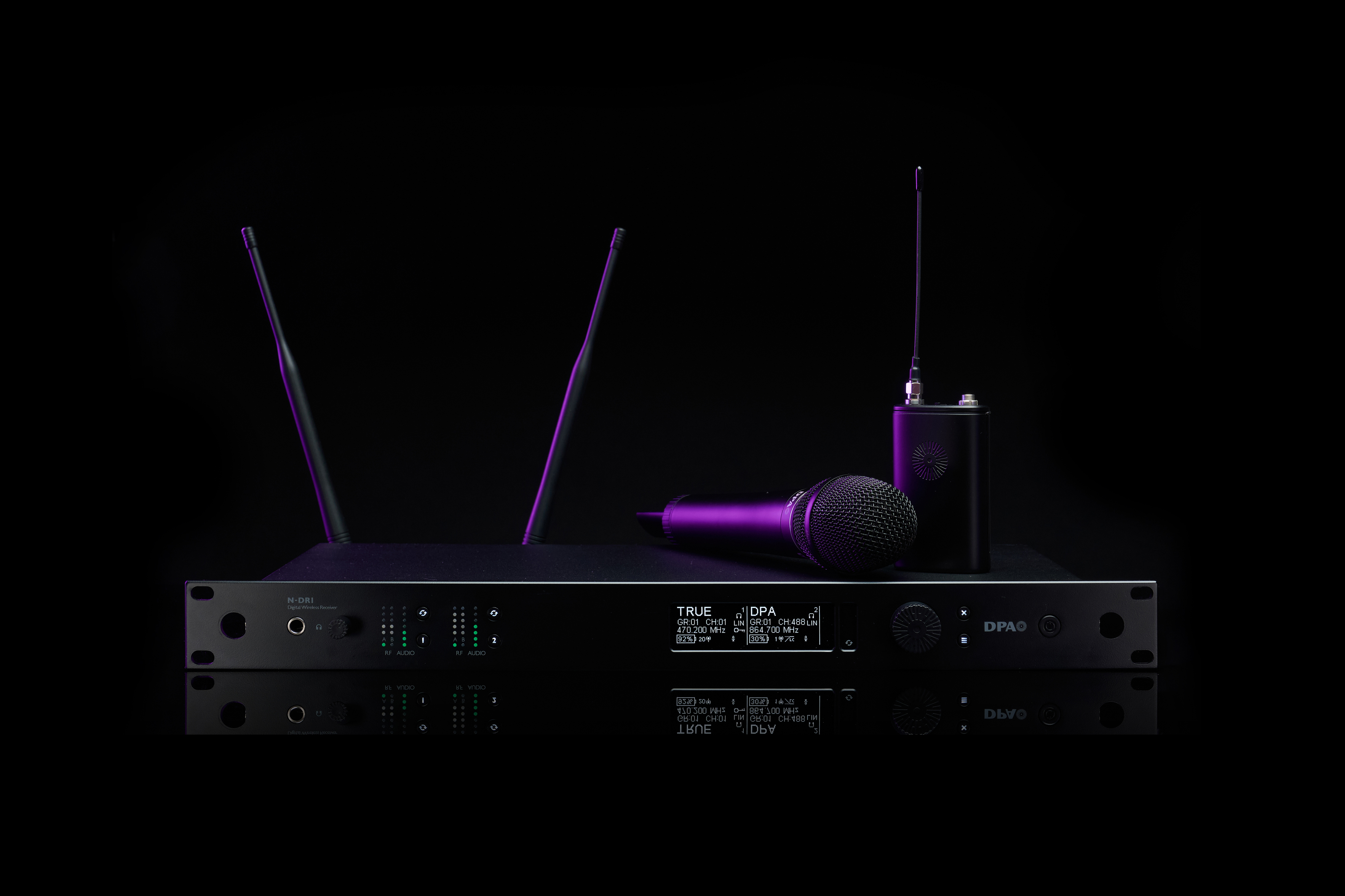
DPA N-Series: First deployment in Argentina
The production marked the first time DPA's N-Series Digital Wireless System had been deployed in Argentina. In a complex RF environment like a major opera house, wireless stability isn't a given. The N-Series delivered it.
Lavecchia's team relied on the N-Series throughout the season, and the system's RF stability held in conditions where other systems struggle. The transmitters' robustness was a practical necessity for a production of this scale and duration — and critically, the wireless chain preserved the natural character of the microphones connected to it. A wireless system that colors or compresses the signal from a DPA microphone defeats the purpose of using one.
4099 Instrument Microphones: Amplifying the orchestra transparently
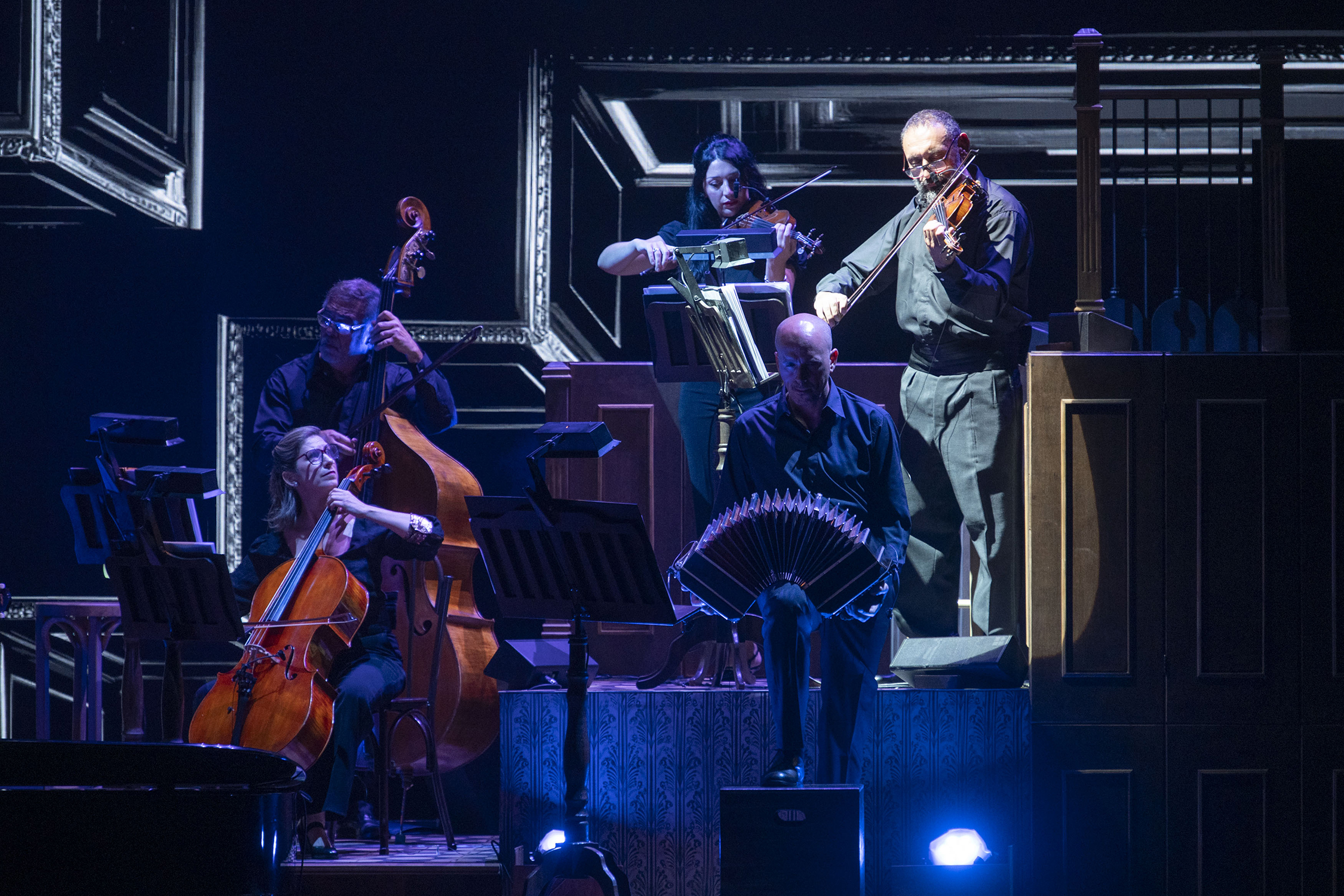
For the orchestra, the team chose DPA 4099 Instrument Microphones. 4099 is built for exactly this kind of assignment: linear frequency response, instrument-specific mounting that keeps the capsule in a consistent position relative to the source, and excellent gain before feedback.
In the Teatro Colón's reverberant environment, that last point matters more than it might in a dryer room. The close, stable capture that the 4099's mounting system provides allowed the team to maintain timbral consistency across the different instrument families without pushing the gain to the point where the room started working against them.
The result was an orchestra that sounded amplified the way orchestras are supposed to sound amplified — which is to say, it didn't sound amplified at all.
6066 Headset Microphones: Invisible on stage, natural clear voice
The cast wore 6066 Omnidirectional Subminiature Headsets. In an immersive theatrical production, microphone visibility is a design problem, not just a vanity issue — anything the audience can see pulls focus from the performance. 6066's ultra-discreet form factor solved that.
More importantly, it solved the voice problem. Operatic settings are particularly prone to what engineers call the "amplified voice" effect: voices that are technically audible but have lost the nuance and natural projection that makes a performance compelling. 6066 gave the cast's voices intelligibility and presence without losing the qualities that make live performance worth attending.
The cast and artistic direction both responded positively — which, in a production of this caliber, is the benchmark that matters.
The Teatro Colón project isn't just a successful deployment. It demonstrates something specific about how DPA microphones are built: when the brief is transparency, they deliver transparency. Not as a marketing claim, but as a measurable outcome in one of the most demanding acoustic environments in the world.
The production was supported by EQUAPHON, DPA's official representative in Argentina, Uruguay, and Paraguay. For the technical team, the artists and the theatre's management, the system did exactly what it needed to do: it became invisible and let Piazzolla's music stay front and center.
Products used in this production:
• N-Series Digital Wireless System
• 4099 Instrument Microphone
• 6066 Omnidirectional Subminiature Headset