 Lavalier
 Headset & Earset
 Handheld
 Instrument
 Pencil
 Shotgun
 Gooseneck
 Immersive
 Kits
Kits
 Receiver
 Bodypack Transmitter
 Handheld Transmitter
 Antennas
 Antenna Distribution
 Wisycom
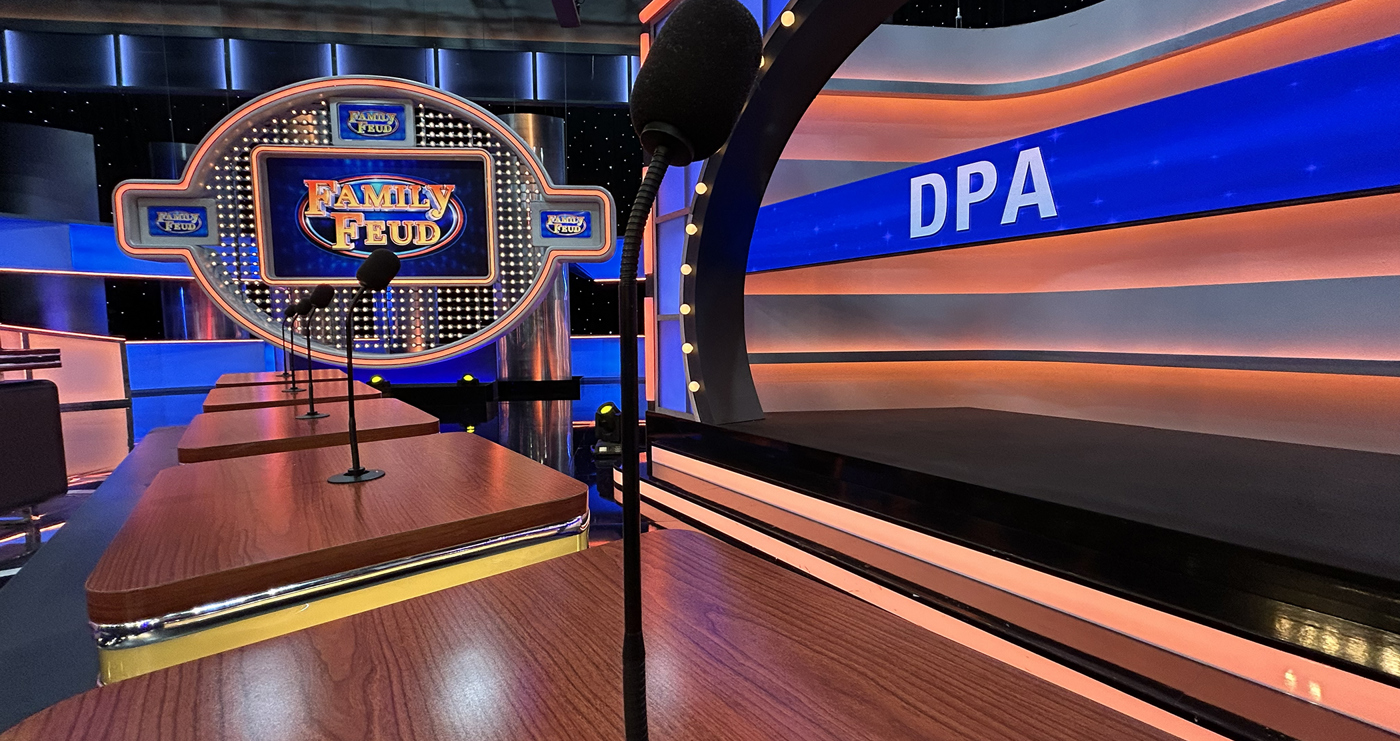
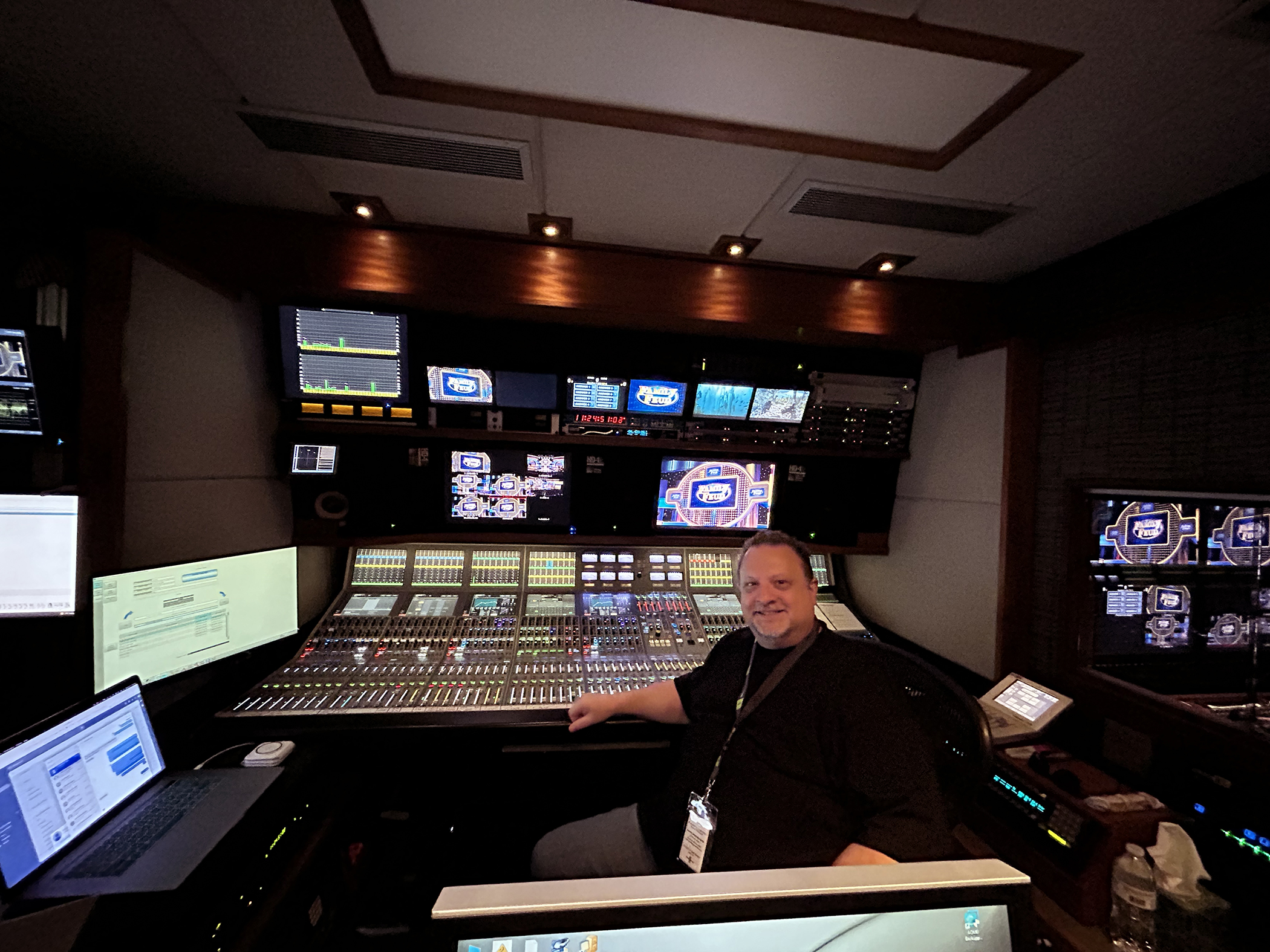
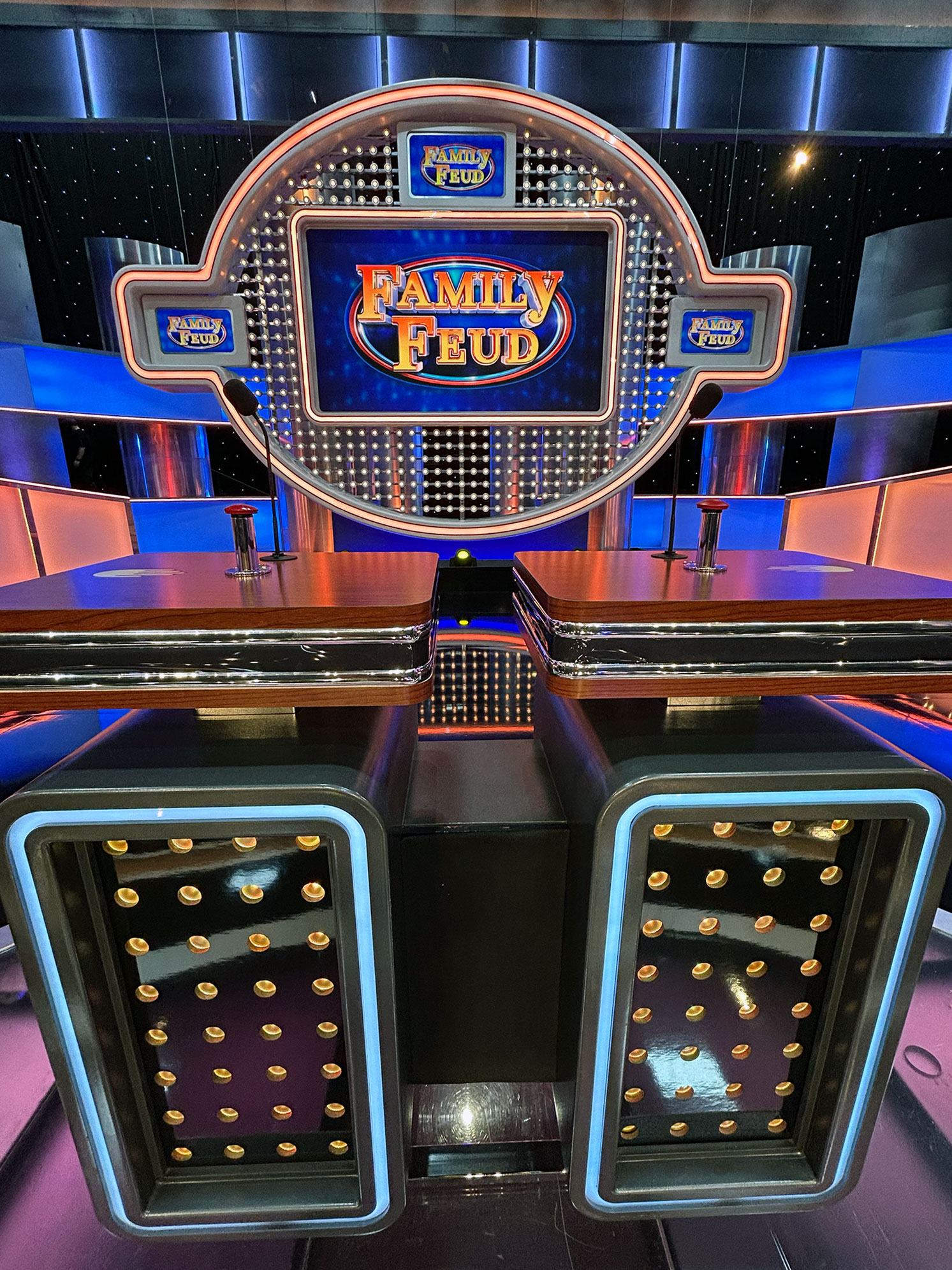
Production sound mixer Dirk Sciarrotta has mixed "Family Feud" for 28 seasons. That's up to 200 syndicated episodes per year, plus primetime celebrity specials — all recorded in a live studio environment where the unexpected is part of the format. Five contestants stand shoulder to shoulder on each family podium. A charismatic host works the stage. And the podium microphones are in every shot.
For Sciarrotta, the challenge isn't just capturing clean audio. It's capturing clean audio while managing bleed between contestants standing inches apart, absorbing the physical punishment of an energetic host and making sure the mics look good on camera. The sound has to be right. So does the picture.
When the show's longtime podium microphones aged out of production and replacement units were no longer available, Sciarrotta faced a high-stakes swap. He needed 12 microphones to cover five positions per family podium and two for the faceoff — mics that could match or beat what the show had relied on for years, hold up under daily physical stress and still look the part on a nationally televised program.
Finding the right mic
Sciarrotta ran side-by-side A/B tests, mounting the DPA Microphones 4018 Supercardioid and the show's previous microphones into identical podiums before making any decision. "The main reason for our upgrade was that our prior mics were aging and no longer available," he says. "Every test we did matched or exceeded what we were using. The DPA sound was equally as good, if not better, and the shock mount was 100 times better than what we had before. Aside from audio quality, they're part of the look of 'Family Feud,' being seen in every shot, so they had to not only sound great but also look good."
The 4018 Supercardioid's tight polar pattern directly addressed the bleed problem. "The supercardioid pattern gives me perfect isolation between contestants," Sciarrotta says. "I try to minimize voices bleeding into other mics. These microphones are very directional, and that is extremely helpful. When contestants stand back and speak normally, it sounds great across the board. Even when they lean in, with the DPAs, the worst I might get is a plosive, and that's easy to manage."
Built to take a hit
The integrated shock mounting in the 4018 Supercardioid proved just as critical as the polar pattern. Host Steve Harvey is known for grabbing and bending the podium mics for comedic effect — a regular part of the show that puts real mechanical stress on the microphones and sends vibration through the podium structure.
"Mr. Harvey hits the podium more than anybody," Sciarrotta laughs. "He'll grab the mic, bend it back toward him and speak right into it. My reflex as a mixer is to pull it down, but for comedic effect, we push it. With proximity it booms and gets thicker, but these mics handle it beautifully." The shock mounts reduce the impact reaching the signal chain. "Those shock mounts absorb so much, and that makes it easier in post-production as well. We don't want to hear much of the podium hits on air."
The signal chain
The 12 podium microphones are hardwired into a splitter that feeds a Yamaha CL5 at front of house and a Calrec Apollo for broadcast production. Sciarrotta works with two A2s, a front-of-house mixer and a playback mixer. Celebrity episodes add a Pro Tools recordist to the team.
Support that sealed the deal
Audio quality and durability got the 4018 Supercardioid into testing. DPA Microphones' responsiveness helped close the decision. "DPA was very responsive through the entire process," Sciarrotta says. "The team came right to me, and we tested them on the spot. That kind of service is fantastic."
Two seasons in
After two full seasons on one of television's most demanding production schedules, Sciarrotta's assessment is straightforward. "I haven't had any problems at all. They're one of my favorite mics that I've ever used. They sound and look great, and they handle everything we throw at them."