 Lavalier
 Headset & Earset
 Handheld
 Instrument
 Pencil
 Shotgun
 Gooseneck
 Immersive
 Kits
 Receiver
 Bodypack Transmitter
 Handheld Transmitter
 Antennas
 Antenna Distribution
 Charger & Batteries
 Wisycom
Where the wind blows: how to place a headset mic to avoid wind from the mouth and nose
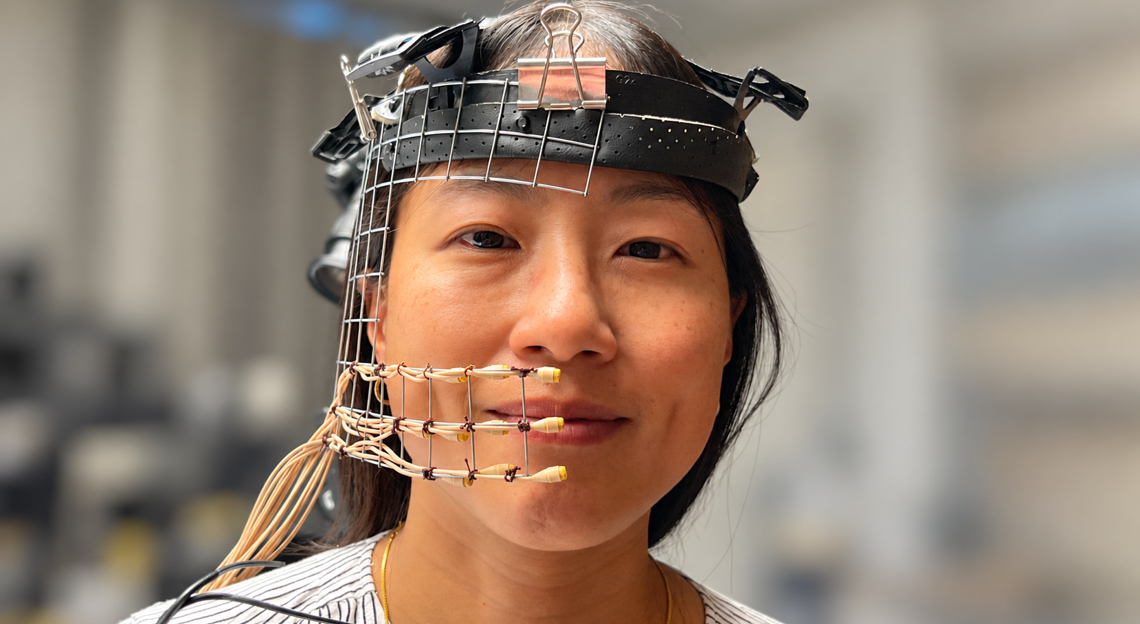
In our efforts to get closer to the sound source, we place the microphone in front of the face, close to the mouth. This article describes the problems we must overcome when working that close, specifically problems related to wind. We performed some experiments to better understand what is going on—right in your face.
Abstract
When a microphone is close to the mouth and nose, it may be exposed to wind. This wind comes from the person wearing it, when talking, breathing, laughing, coughing or sneezing. Some consonants (plosives and, to some degree, fricatives) cause a considerable amount of wind!
The amount of wind differs from person to person, in both direction and strength. The influence from the breath (or rather, the voice-to-breath ratio) depends on the speech level, whether the talker is nervous, whether the talker moves (walking, dancing), etc.
Experiments with a face array of microphones showed that the closest tested position that wasn’t directly hit by oral or nasal wind is approximately flush with the underside of the nose, about 38 mm from the nose/mouth centerline. If you want to place the microphone in line with the mouth, you must move it farther to the side to avoid wind without using a windshield.
Good reasons
There are many good reasons for placing a microphone on a person's head. The main one is that the microphone follows the head, which keeps a fixed distance between the sound source and the receiver. Furthermore, the distance is short. This provides the highest possible sound level at the microphone. We can also take advantage of proximity when using directional microphones.
The immediate disadvantage is that the blow from the mouth—from plosives such as /p/, fricatives such as /f/ or breathing—may hit the microphone if it is too close. Depending on the microphone’s sensitivity to wind and its wind protection, wind noise may be generated at the microphone.
How it should sound
We know how the voice should sound. In normal conversation, we are used to hearing the voice at about 1 m (3.3 ft). We know that if we listen or record closer to the mouth, the voice spectrum may change [1].
Also, when we pull the microphone off-axis to the side of the head, we may miss the higher frequencies of the speech signal. These must then be compensated for either by the microphone's frequency characteristics or by signal processing.
At 1 m (3.3 ft) from the speaker, we usually do not hear mouth clicks, smacks, etc. However, they may become very audible when you pick up the sound very close to the mouth. This is what we listen for and try to avoid, or compensate for, if needed [2].
Noise canceling
In many situations, we need more background noise suppression than a close (omni) microphone position provides. So, we apply noise-canceling principles. The basic principle is to use a pressure-gradient microphone. First, we gain directivity, so we can point the microphone at the source and away from the noise. However, the head's surface also acts as a reflector, which may reflect sound back into the microphone.
The greatest advantage of using a gradient microphone, though, is the proximity effect: the bass rises as the capsule gets closer to the sound source. DPA Microphones then balances the frequency response so that it is fairly flat near the source, while the low-frequency content of distant sources is consequently heavily reduced (see Figure 1).
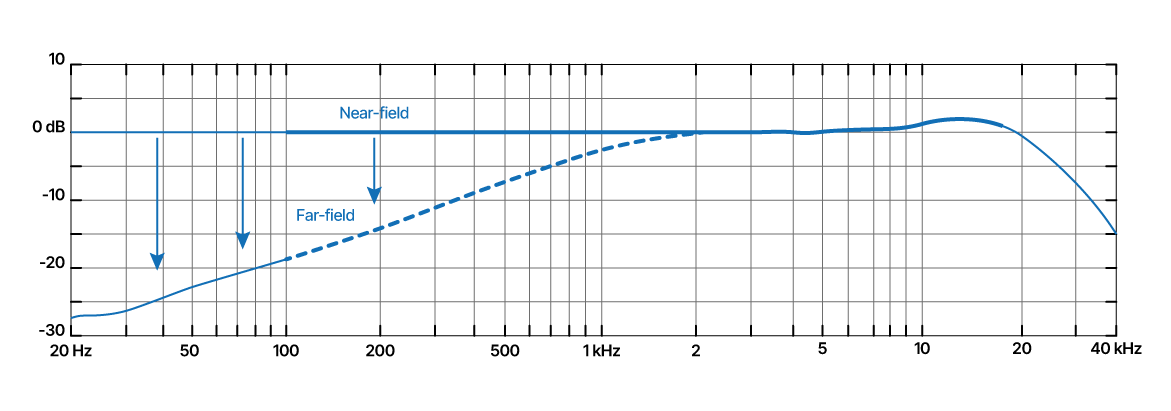
Figure 1. Suppression of far-field sound sources by a gradient microphone (DPA 6388) at 0°. The flat near-field response is obtained at a distance of 30 mm from the source (the mouth).
For optimum performance, the microphone shouldn’t move during use, and any wind or blow should be prevented, because a pressure-gradient microphone is generally more sensitive to wind than a pressure microphone [3], [4].
The experiment
This article is closely related to practice. We tried to map the disturbance caused by wind from the mouth and the nose when speaking, when pronouncing consonants (fricatives and plosives) and when breathing (see details below). We did not include laughing, coughing or sneezing, which of course can also cause unintended but rather fierce airflow, as seen from the microphone’s perspective.
Consonants are especially interesting because Western languages, at least, rely heavily on them. That’s why people may understand you when you whisper, without using your voice. Passing air is the basis for consonants (see Box A).
The literature includes various studies that apply mathematical modeling to understand airflow generation under different conditions. In [5], the airflow in the vertical plane is analyzed. It shows that fricatives may generate airflow of up to 20 m/s right between the lips. The airflow can be directed at a wide up/down angle. We wanted to map where this airflow lands, both vertically and horizontally.
The probe
For this experiment, we designed a face array: a grid of 10 miniature microphones (DPA 4060) for simultaneous recording of the sound and airflow (see Figure 2).
The array covered only one half of the face. Assuming the mouth and nose outlets are symmetrical (left/right), this covers 17 positions.
Even though omni microphones are less sensitive to wind than directional microphones, they still produce unwanted noise when hit directly by strong wind.
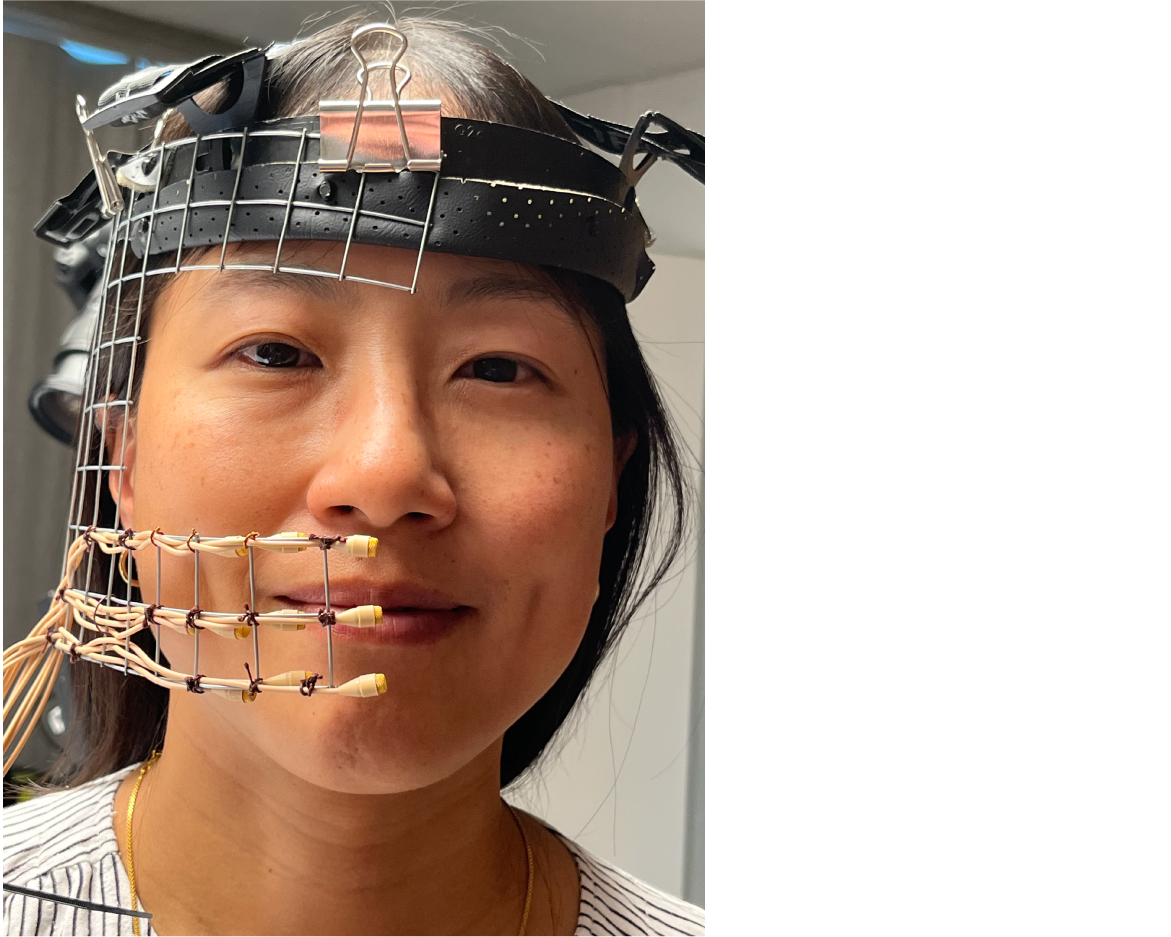
Figure 2. Face array covering one half of the face. Microphones: DPA 4060. Array grid size: 19 x 19 mm.
The microphones were mounted in a 19 x 19 mm (3/4 x 3/4 inch) grid. We chose this resolution for practical reasons, to cover a relevant area of the face with the number of microphones available. Each microphone was about 10 mm (0.4 inch) from the face.
The upper row contained three microphones (positions 1–3, numbered from the centerline outward), with the first right under the nose (see Figure 3).
The second row contained four microphones (positions 4–7), with the first right in front of the mouth, aligned with the underside of the upper lip with the mouth closed.
The third row, 19 mm (3/4 inch) below the second row, contained three microphones (positions 8–10), like the upper row.
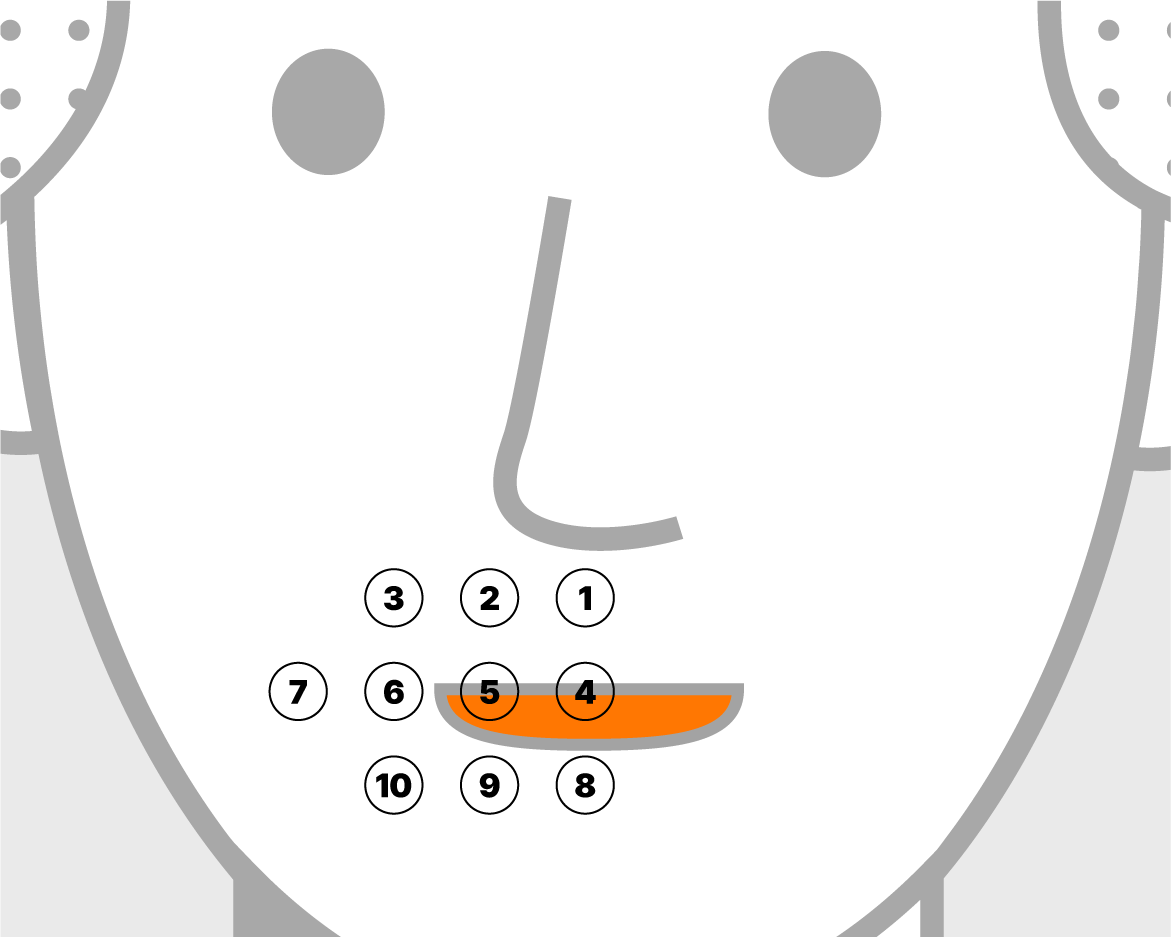
Figure 3. Microphone positions, with reference to the photo in Figure 2.
The microphone outputs were recorded digitally.
The procedure
Each subject wore the array and acted as the sound source. When averaged, one minute of talking provides a consistent speech spectrum. For this part of the experiment, however, we identified the wind-affected microphones simply by listening.
We listened to the one-minute samples of normal speech for windblasts (see Figure 4).
The subjects spoke a list of consonants, and we noted which ones caused wind gusts at the microphones (see Figure 5).
The subjects also blew in different directions (straight forward, up, down, left, right and in a circular sweep), and we noted which positions the blows hit.
Finally, we analyzed heavy breathing through the mouth alone and through the nose alone.
Eight subjects participated in the experiment (two female and six male). We fitted the array individually to each subject’s facial curvature.
Results
The results are shown in Figures 4–7. The numbers and colors indicate the percentage (rounded) of subjects for whom wind was detected in each situation tested:
0% = No wind detected
13% = Wind detected in one of eight subjects
25% = Wind detected in two of eight subjects
38% = Wind detected in three of eight subjects
50% = Wind detected in four of eight subjects
63% = Wind detected in five of eight subjects
75% = Wind detected in six of eight subjects
88% = Wind detected in seven of eight subjects
100% = Wind detected in all eight subjects
Speech
| 0 | 100 | 100 |
13 | 50 | 100 | 100 |
| 25 | 100 | 100 |
Figure 4. For one minute of normal speech, wind noise is detected most strongly in the six microphones closest to the vertical centerline (0 mm and 19 mm). The only position with no wind detected is position 3.
Consonants
/b/ | |||
| 0 | 0 | 0 |
0 | 0 | 25 | 63 |
| 0 | 50 | 88 |
/d/ | |||
| 0 | 0 | 0 |
0 | 0 | 13 | 50 |
| 0 | 25 | 38 |
/f/ | |||
| 0 | 50 | 75 |
0 | 25 | 63 | 100 |
| 0 | 50 | 50 |
/h/ | |||
| 0 | 13 | 0 |
0 | 0 | 50 | 88 |
| 0 | 88 | 100 |
/p/ | |||
| 13 | 13 | 50 |
25 | 63 | 100 | 88 |
| 50 | 100 | 100 |
/s/ | |||
| 0 | 0 | 25 |
0 | 38 | 38 | 13 |
| 25 | 75 | 88 |
/s/ | |||
| 0 | 0 | 50 |
50 | 75 | 75 | 100 |
| 25 | 100 | 88 |
Figure 5. Microphone hits related to various consonants. In all cases, position 3 is not hit. Some consonants, e.g., /s/, direct wind more to the side than straight forward.
Blows
Blow straight | |||
| 0 | 0 | 38 |
0 | 13 | 75 | 100 |
| 38 | 75 | 100 |
Blow left | |||
| 0 | 0 | 0 |
0 | 100 | 25 | 63 |
| 0 | 50 | 88 |
Blow right | |||
| 0 | 0 | 0 |
0 | 100 | 25 | 63 |
| 0 | 50 | 88 |
Blow up | |||
| 0 | 0 | 0 |
0 | 50 | 25 | 63 |
| 0 | 50 | 88 |
Blow down | |||
| 0 | 0 | 0 |
0 | 50 | 25 | 63 |
| 0 | 50 | 88 |
Blow round | |||
| 0 | 0 | 0 |
0 | 100 | 25 | 63 |
| 0 | 50 | 88 |
Figure 6. The effect of pure mouth blowing. Note that the upper microphones 19 mm and 38 mm from the centerline are not hit.
Breathing
Breath mouth | |||
| 13 | 13 | 38 |
0 | 63 | 75 | 75 |
| 50 | 100 | 75 |
Breath nose | |||
| 0 | 100 | 0 |
0 | 50 | 88 | 63 |
| 0 | 75 | 50 |
Figure 7. Microphones hit by breathing. Note that there is no wind right under the nose due to the nasal septum.
Conclusion
People differ, and so does the way they talk. Mouth size, jaw position, etc., all influence the direction of the oral and nasal airflow. A headset microphone gives the user freedom of movement and high gain before feedback. However, it helps to know where to place the microphone if you want to use it without extra wind protection.
In the experiment, the closest tested position that wasn’t hit by wind from the speaker was 38 mm from the nose/mouth centerline, flush with the underside of the nose (position 3; see Figure 3).
If, for visual reasons, you prefer to place the microphone on the side, in line with the mouth, move it farther to the side, about 57 mm from the centerline. However, a few individuals may generate “side winds” on some consonants.
Box A: Plosives and fricatives
The consonants most likely to cause wind are plosives and fricatives.
Plosives
Mechanism: The vocal tract closes completely, holding back the air and building oral pressure until a sudden, explosive release.
Airspeed and flow: Plosives produce an intense, momentary puff of high-velocity air (a transient burst) rather than continuous flow. When released, peak oral airflow for plosive consonants typically ranges from 0.1 to 1.0 liter per second, resulting in speeds of up to 5 m/s, depending on the sound and voicing.
The speed drops off quickly over distance, but air hitting a microphone diaphragm directly at close range causes a low-frequency thump or distortion known as a “p-pop.”
Voiceless plosives: /p/, /t/, /k/ (made with air only)
Voiced plosives: /b/, /d/, /g/ (made with vocal cord vibration)
Fricatives
Mechanism: The lips and tongue form a narrow constriction, forcing air through a small opening to create turbulent, noisy airflow.
Airspeed and flow: Sustained, continuous airflow with moderate velocity, lasting much longer than a plosive burst.
There are nine fricative sounds in English (the number varies by language [6]):
Labiodental (lips and teeth): /f/, /v/
Dental (tongue and teeth): /θ/ (voiceless) as in think; /ð/ (voiced) as in this
Alveolar (tongue near the ridge behind the upper teeth): /s/ (voiceless) as in see; /z/ (voiced) as in zoo
Post-alveolar (tongue farther back on the roof of the mouth): /ʃ/ (voiceless) as in shoe; /ʒ/ (voiced) as in measure
Glottal (throat): /h/ (voiceless) as in hat
Source: [4]
Box B: Comments on the experiment
This experiment had only eight subjects, which is a small population. However, it seemed to yield consistent results.
Further experiments are needed—for instance, to measure the angle-dependent sound-reflecting factor of the head’s surface, an effect that may create comb filtering.
The spectral changes at the different positions are also worth quantifying.
We’ll look into this in the future. Every experiment is a pilot for the next.
References
[1] Brixen, Eddy B.: Spectral degradation of speech captured by miniature microphones mounted on persons’ heads and chests. AES Convention no. 100, Copenhagen, Denmark. Preprint 4284. 1996.
[2] What is close miking & why use it?
[3] Brixen, Eddy B.: Wind Generated Noise in Microphones - an Overview - Part I. AES Convention 120, Paris, France. Preprint 6635. 2006.
[4] Brixen, Eddy B.: Wind Generated Noise in Microphones - an Overview - Part II. AES Convention 121, San Francisco, CA, USA. Preprint 6879. 2006.
[5] Mofakham, Amir A.; Helenbrook, Brian T.; Erath, Byron D.; Ferro, Andrea R.; Ahmed, Tanvir; Brown, Deborah M.; Ahmadi, Goodarz: On the variation of fricative airflow dynamics with vocal tract geometry and speech loudness. Aerosol Science and Technology, Volume 56, 2022, Issue 5.
[6] WALS Online - Chapter Voicing in Plosives and Fricatives.