Lavalier
 Headset & Earset
 Handheld
 Instrument
 Pencil
 Shotgun
 Gooseneck
 Immersive
 Kits
 Receiver
 Bodypack Transmitter
 Handheld Transmitter
 Antennas
 Antenna Distribution
 Charger & Batteries
 Wisycom
Getting started in the business
Music has always been part of my life. When I was a kid, my mother played me Romani music, Jean-Michel Jarre and Pink Floyd. I studied classical guitar for 10 years, even though I was already dreaming of rock. After graduating, I tried studying biology at university, but that didn’t last (laughs). So, I applied to EMC and found a work-study placement at L’Artishow, a drag cabaret in Paris. I learned a lot there: sound, lighting, stage management, customer relations... and even washing dishes in the summer to pay for my studies.
The work-study changed everything. I started with music production and discovered Cubase, Pro Tools, the professional vocabulary... I finished the year top of my class and finally joined the sound engineering program for contemporary music. That’s when I signed with DCA and met Josselin Naltet.
Learning from a mentor
At DCA, everything started to make sense. Concepts that had been abstract until then—power supply, power, impedance—suddenly became concrete and useful in the field. It was a real lightbulb moment. And then there was Josselin Naltet, who gave me my chance despite my somewhat shaky application. He quickly became much more than a boss: a mentor. His vision and his ability to anticipate have deeply shaped my path.
I started “in the basement,” convinced I wouldn’t last three months... and I stayed there for nearly 10 years. I spent my days preparing setups, assisting engineers, comparing gear. Back then, the Cantars still ran on DVDs that we had to burn to run tests. Then came the switch to flash cards... It was really like Pokémon: every time a new generation, cooler, with new attacks. I was so passionate that it didn’t even feel like work.
At DCA, I was lucky enough to take part in incredible projects. One of the most memorable is still the Gombessa missions: we installed mics everywhere for Laurent Ballesta’s underwater expeditions. For me, it was a childhood dream. I told myself, “With sound, if you dig deep, you get access to a huge cultural universe.”
And you had to be effective right away. Sometimes there were blunders (laughs), but we learned by testing. Josselin always said: “Prep your gear as if you were the one who’s going to use it.” It might sound obvious, but to this day, I repeat that phrase to myself every time I prep. I’ve kept that methodology: stay curious, anticipate, have a plan B... always.

Going further
After 10 years, I left DCA to join Areitec. Why? Because I wanted to work with gear I hadn’t gotten my hands on yet and go deeper into repair and maintenance. I needed to see something different, to broaden my horizons.
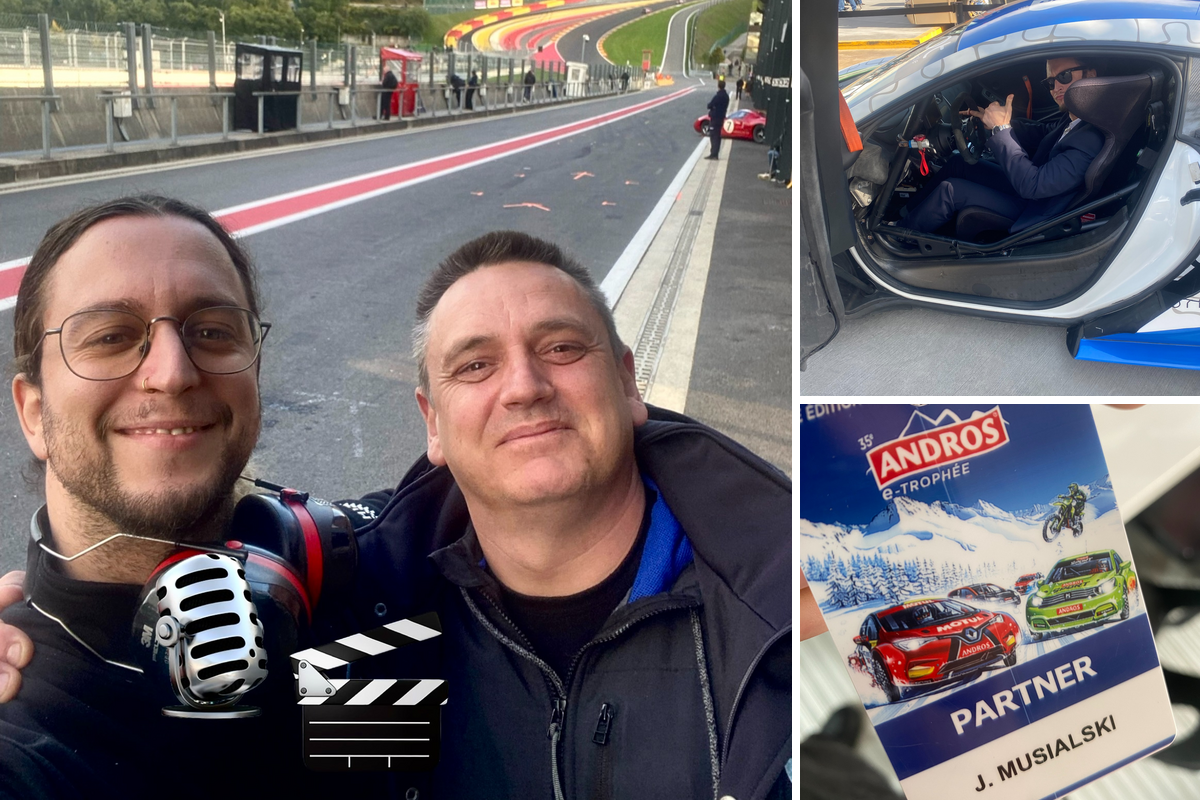
That’s when I was approached to record sports cars. As someone passionate about GT3 and Formula 1, that was huge. With the racing team, we covered several races. Every time, the welcome was professional and respectful. And it felt good to be treated as a real sound engineer, in a world where you hear far too often that “sound is the poor relation of audiovisual production.”
I realized I wanted to go further. I could already see the potential of sound as a central element of storytelling. That’s when the idea of going independent became obvious: putting my skills to work on more varied projects, moving out of the prep technician role to become a full-fledged player in sound recording. Thanks to the contacts I’d kept through DCA, I was very quickly approached by YouTube teams and by Canal+, who were looking to professionalize their approach to audio.
Sound is not secondary
I often push back against the idea that sound is secondary. For me, it’s the opposite: without clear sound, the picture falls apart. You can have the best 8K camera in the world, but if you can’t hear what’s being said, the storyline is dead. On YouTube, it’s glaringly obvious: in a game or a challenge, if you don’t catch a creator’s line or the moment they find a clue, you completely lose the thread. So yes, I want to put sound back at the heart of the audiovisual experience. A recording isn’t just “a nice sound”: it’s what supports the storytelling.
Small teams, huge needs
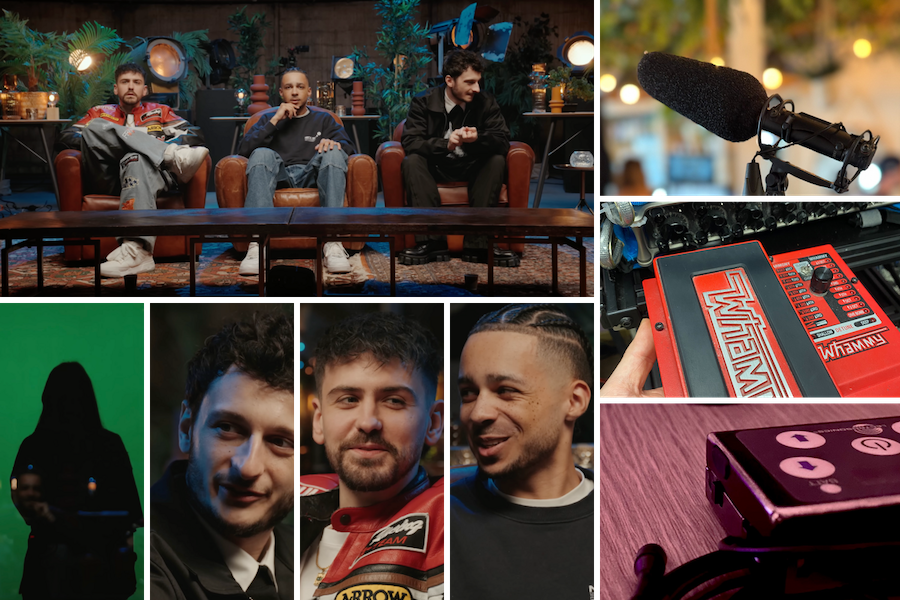
On YouTube shoots, I manage not only the recording but also the full wireless deployment. The teams are small—two, three, sometimes four people on sound—but the needs are huge. We mic up all the talent, sometimes with two mics each, manage the antennas and the timings, and must keep everything running with no dropouts.
Today, systems like Bolero have become standard. The director can choose exactly who to listen to, even if 16 people are talking at once. And I integrate that into Dante setups so everything runs smoothly. I work hand in hand with the lighting teams so the cues trigger automatically: one MIDI signal, and the lighting and sound go together. I designed my setups as modular blocks: you run one RJ45 cable, and you have everything—earpieces, sound feeds, monitoring.
As sound lead, the pressure is enormous: everything must be in sync, everything must work the first time. But that’s what’s exciting: we’re getting close to TV standards, except we must move much faster, with young, super creative teams.
The human side
What I love about YouTube is the energy. Audiovisual pros are sometimes convinced that certain videos were shot in a studio... but no, it’s real sound, recorded in the field. And that makes me smile: that’s the magic. With budgets that are still tight but creativity that’s exploding, you must be responsive, versatile and ready to improvise.
What stays with me most is the human side. You show up with your gear, but above all you must listen to the team, understand their needs and anticipate. In the end, it’s not just “recording sound”: it’s offering solutions, making the storytelling flow and simplifying the tech so everyone can focus on the content.
Since DCA, I’ve always had this reflex: “What if we could do better?” Today, I put it into practice. Not to overdo it, but because I’m passionate about it. And that changes everything: the director is more relaxed, the team saves time, and I can focus on what I really love—capturing clear, natural sound that supports the story.
What the field teaches you
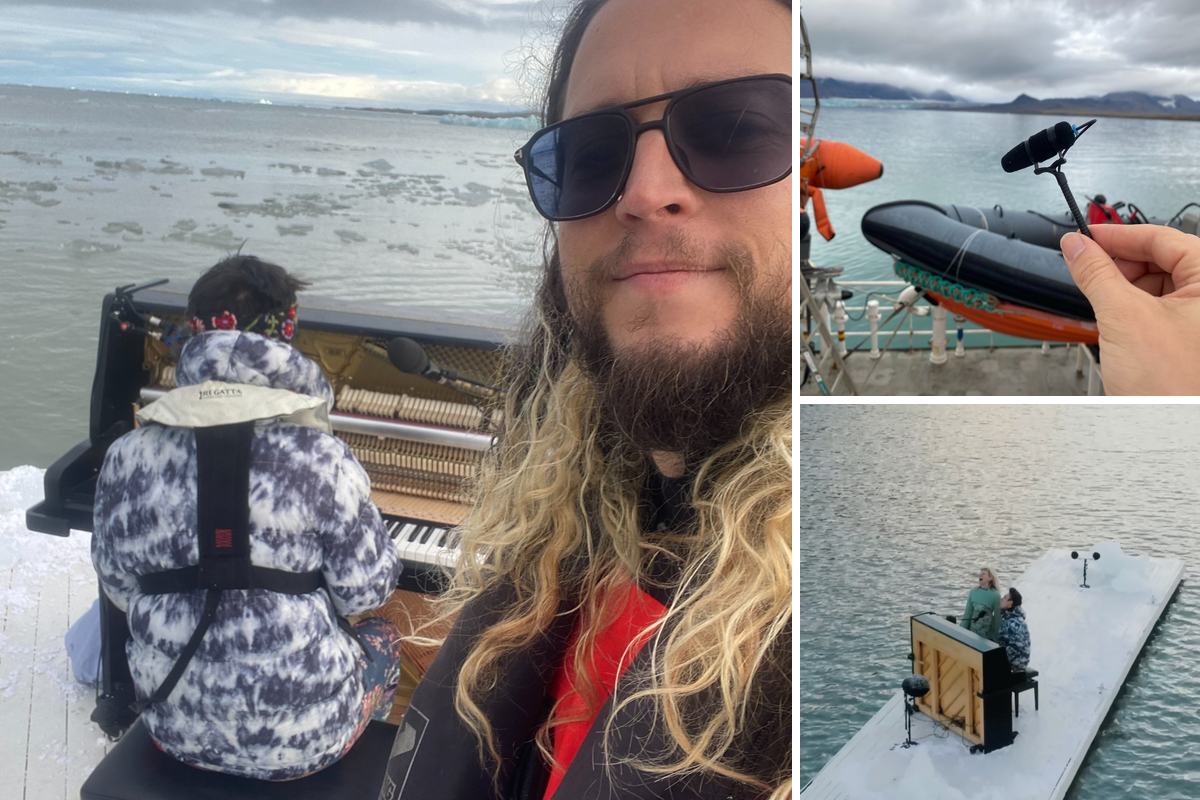
On the Jacob Collier and AURORA shoot in the Arctic, what struck me was that sound was at the center. The video team waited until we were ready before shooting. That’s rare, and it changes everything.
From that project, I take away three things. First, the importance of anticipating: always have a plan A, B, C. Second, battery life: you must know your gear by heart, know how much power each capsule, each wireless unit, each recorder draws. Finally, humility: the field always reminds you that you don’t control everything.